
110 kV SF6 circuit breakers: dead-tank and live-tank
For 110 kV networks we supply two SF6 circuit breakers for a highest operating voltage of 145 kV: the dead-tank 3AP1 DT (rated current 3,150 A, breaking current 40 kA, built-in current transformers) and the live-tank 3AP1 FG (4,000 A, 40 kA). Both series come in three-pole and single-pole versions, with a spring-operated mechanism and an interrupter designed for minimum operating energy, for service from −60 to +55 °C.
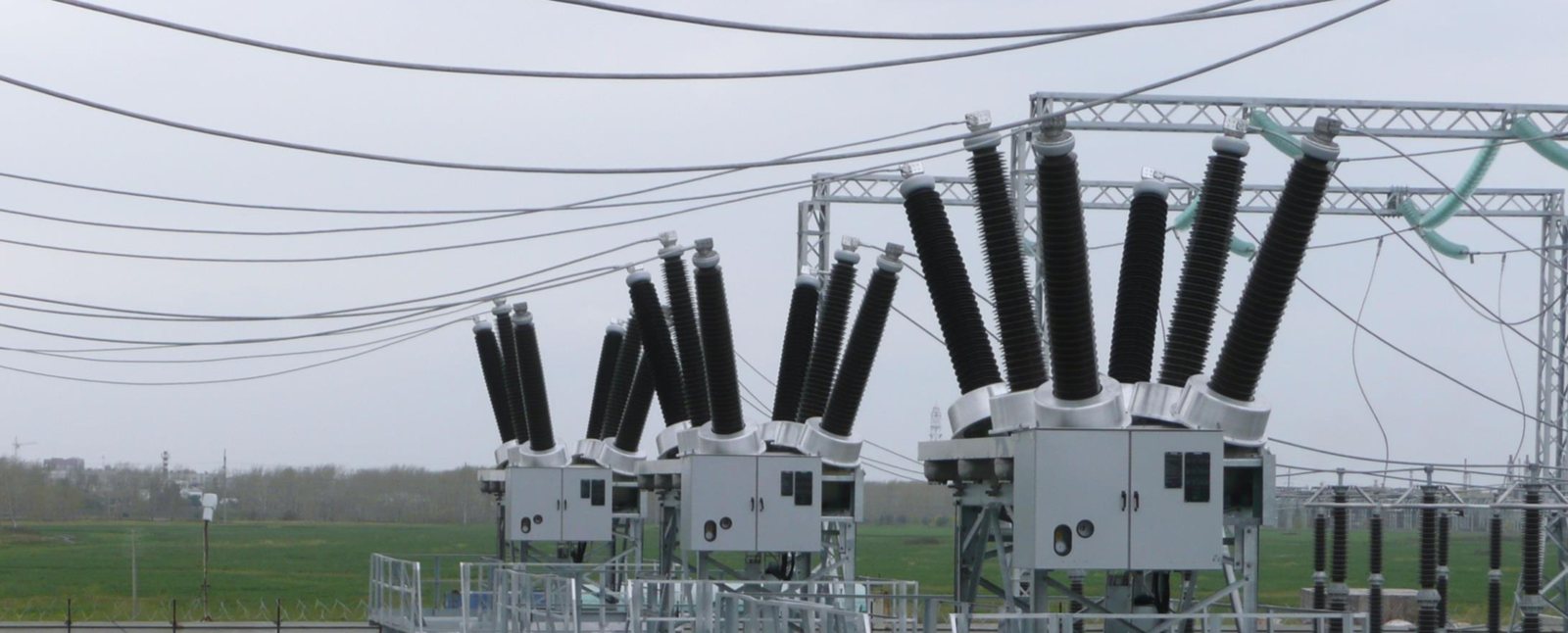
Key facts
- Network class 110 kV → highest operating voltage of the apparatus 145 kV.
- Dead-tank 3AP1 DT · 145 kV: 3,150 A, 40 kA, built-in toroidal current transformers on the bushings.
- Live-tank 3AP1 FG · 145 kV: 4,000 A, 40 kA, interrupter on an insulating column.
- Both series: three-pole and single-pole versions, spring-operated mechanism, service from −60 to +55 °C.
Two series for 110 kV
Dead-tank SF6 circuit breakers 3AP1 DT and 3AP2 DT, 110–500 kV
Dead-tank SF6 circuit breakers 3AP1 DT (110–220 kV) and 3AP2 DT (330–500 kV) for a highest operating voltage of 72.5–550 kV: rated current 3,150–4,000 A, breaking current 40–63 kA. Three-pole and single-pole versions; compact built-in toroidal current transformers; service from −60 to +55 °C; the insulating and arc-quenching medium is a mixture of SF6 and a fluorocarbon (pure SF6 on request); an interrupter designed for minimum operating energy; spring-operated mechanism.
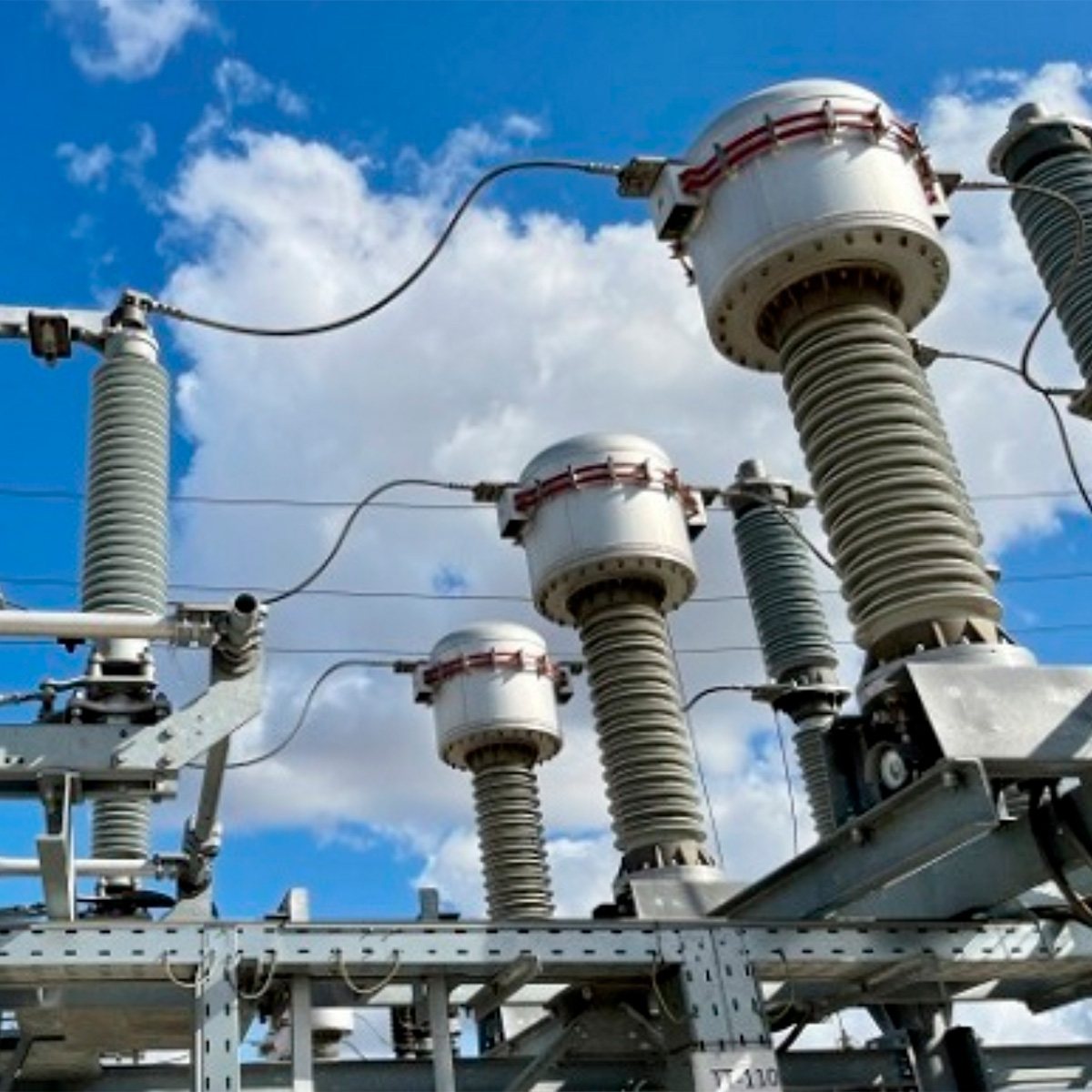
Live-tank SF6 circuit breakers 3AP1 FG and 3AP2 FI, 110–500 kV
Outdoor live-tank SF6 circuit breakers: 3AP1 FG for 110–220 kV (72.5–245 kV rated voltage) and 3AP2 FI for 330–500 kV (362–550 kV). Rated current up to 5,000 A, breaking current up to 63 kA, three-pole and single-pole designs, spring-operated mechanism, operation from −60 to +55 °C. The assembly plant for dead-tank and live-tank breakers can produce up to 350 units a year.
Dead-tank or live-tank for a 110 kV network
| Parameter | Dead-tank 3AP1 DT145 kV | Live-tank 3AP1 FG145 kV |
|---|---|---|
| Highest operating voltagekV | 145 | 145 |
| Rated currentA | 3,150 | 4,000 |
| Rated breaking currentkA | 40 | 40 |
| Location of the interrupter | in an earthed tank | on an insulating column at line potential |
| Built-in current transformers | yes — compact toroidal CTs on the bushings | no |
| Insulating and arc-quenching medium | mixture of SF6 and a fluorocarbon (pure SF6 on request) | SF6 |
| Versions | three-pole and single-pole | three-pole and single-pole |
| Operating mechanism | spring-operated | spring-operated |
| Operating temperature | −60 to +55 °C | −60 to +55 °C |
The live-tank breaker is more compact and lighter; the dead-tank breaker suits sites that need built-in current transformers and high seismic withstand.
How to select a 110 kV circuit breaker
A 110 kV circuit breaker is selected on the basis of the bay data; the simplest way to send them is an enquiry data sheet, on which we base the technical and commercial proposal. The values obtained are then checked against the series ratings in the section “Dead-tank or live-tank for a 110 kV network”. Where there is no room for an air-insulated switchyard, 110 kV GIS is considered instead of outdoor breakers.
| Parameter | How to determine it |
|---|---|
| Voltage | for the 110 kV voltage class the highest operating voltage is 126 kV (GOST R 52565-2006); the next higher value in the IEC 62271-1 series is 145 kV |
| Rated current | not lower than the highest continuous current of the bay, including post-fault conditions |
| Breaking current | not lower than the calculated short-circuit current at the point of installation |
| Climate | by the lowest site temperature; for frosts down to −60 °C, the UKhL1 and KhL1 climatic versions to GOST 15150-69 |
| Current transformers | number of cores, ratios and accuracy classes: metering — 0.2S or 0.5S, protection — 5P or 10P (GOST 7746-2015); the dead-tank 3AP1 DT has built-in current transformers, while separate ones are installed for the live-tank 3AP1 FG |
| Pole operation | a mechanism per pole is needed for single-phase tripping and single-phase auto-reclosing |
Applications
Where they are installed
- air-insulated switchyards of 110 kV substations
- 110 kV distribution networks: line and transformer bays
- substations of industrial plants and power stations
- switchyard refurbishment replacing oil and air-blast breakers
Industries
Installation supervision and acceptance tests
Before energisation a 110 kV circuit breaker undergoes acceptance tests to the Russian Electrical Installation Code (PUE, 7th edition, clause 1.8.21), and the results are compared with its passport and the manufacturer’s limits. We carry out installation supervision of newly installed equipment under a separate contract, including together with supply.
| Check | Requirement |
|---|---|
| insulation resistance of secondary circuits and control coil windings | to clause 1.8.37 |
| high-voltage withstand test of the insulation | at power frequency; may be omitted if the breaker was filled with SF6 at the factory and is not to be opened during its service life |
| resistance of the main circuit — of the whole pole and of each break | within the manufacturer’s limits |
| minimum operating voltage | no more than 0.85 of rated voltage with a DC supply to the mechanism, 0.7 with an AC supply |
| grading capacitors | to clause 1.8.30, if fitted; capacitance within the manufacturer’s limits |
| breaker characteristics, e.g. closing and opening times | scope as set out in the manufacturer’s instructions, results within the passport data |
| repeated operations | 3–5 closings and openings, 2–3 operating cycles of each type |
| gas tightness | the leak detector shows no leaks at the rated SF6 pressure |
| SF6 moisture content | dew point not higher than −50 °C |
| built-in current transformers | to clause 1.8.17 |
The tests are carried out by our own high-voltage test laboratory: Rostechnadzor certificate No. 9834 of 20 December 2024 entitles it to perform acceptance tests and measurements of electrical equipment rated up to 750 kV, including SF6 circuit breakers. After commissioning the breaker is maintained by our high-voltage equipment service.
Service and testing
Documents
Questions and answers
Why a 145 kV breaker for a 110 kV network?
Under GOST R 52565-2006 the highest operating voltage for the 110 kV voltage class is 126 kV. The nearest values in the IEC 62271-1 series of rated voltages are 123 and 145 kV; 123 kV is below 126 kV, so a 145 kV apparatus is chosen for a 110 kV network. The dead-tank 3AP1 DT and the live-tank 3AP1 FG are built for this voltage.
Which dead-tank breaker is needed for a 110 kV network?
The 3AP1 DT for a highest operating voltage of 145 kV: rated current 3,150 A, <a class="term-link" href="../glossary/breaking-current/index.html" title="What is the breaking current of a circuit breaker">breaking current</a> 40 kA, built-in toroidal current transformers.
Which live-tank breaker is needed for a 110 kV network?
The 3AP1 FG for a highest operating voltage of 145 kV: rated current 4,000 A, <a class="term-link" href="../glossary/breaking-current/index.html" title="What is the breaking current of a circuit breaker">breaking current</a> 40 kA.
How does a 110 kV dead-tank breaker differ from a live-tank one?
In a dead-tank breaker the interrupter sits in an earthed tank that also houses the <a class="term-link" href="../glossary/current-transformer/index.html" title="What is a current transformer">current transformers</a>; in a live-tank breaker it sits on an insulating column at line potential. The live-tank breaker is more compact and lighter; the dead-tank breaker suits sites that need built-in CTs and high seismic withstand.
Do 110 kV breakers operate at −60 °C?
Yes, both series operate from −60 to +55 °C. The dead-tank 3AP1 DT uses a mixture of SF6 and a fluorocarbon for cold climates; pure SF6 on request.
Which tests does a 110 kV circuit breaker undergo before energisation?
Acceptance tests to PUE clause 1.8.21: insulation resistance of secondary circuits, a high-voltage withstand test of the insulation (it may be omitted for a breaker filled with SF6 at the factory and not opened during its service life), main circuit resistance, minimum operating voltage, the characteristics listed in the manufacturer’s instructions, repeated operations, gas tightness, SF6 moisture and the built-in current transformers. Our test laboratory is registered with Rostechnadzor: certificate No. 9834 of 20 December 2024.
Can installation supervision be ordered together with the breaker supply?
Yes. Installation supervision of newly installed equipment is carried out under a separate contract and can go together with supply; the tests are performed by our own test laboratory. After that the breaker is maintained by our service centre: maintenance without pumping out the SF6 on request or after 12 years, complex repair at the works on request or after 25 years.
Expert in charge
High-voltage equipmentManufacturers' names and designations are used to identify the equipment we supply and service. Trademarks belong to their respective owners. Energy Management LLC is an independent engineering and service company.