
SF6 circuit breakers 110–500 kV: dead-tank and live-tank
We supply dead-tank SF6 circuit breakers 3AP1 DT and 3AP2 DT and live-tank breakers 3AP1 FG and 3AP2 FI for a highest operating voltage of 72.5–550 kV: rated current up to 5,000 A, breaking current up to 63 kA, spring-operated mechanism. The assembly plant can build up to 350 breakers a year; a version for service from −60 to +55 °C is available; our service centre supports the equipment over its whole life.
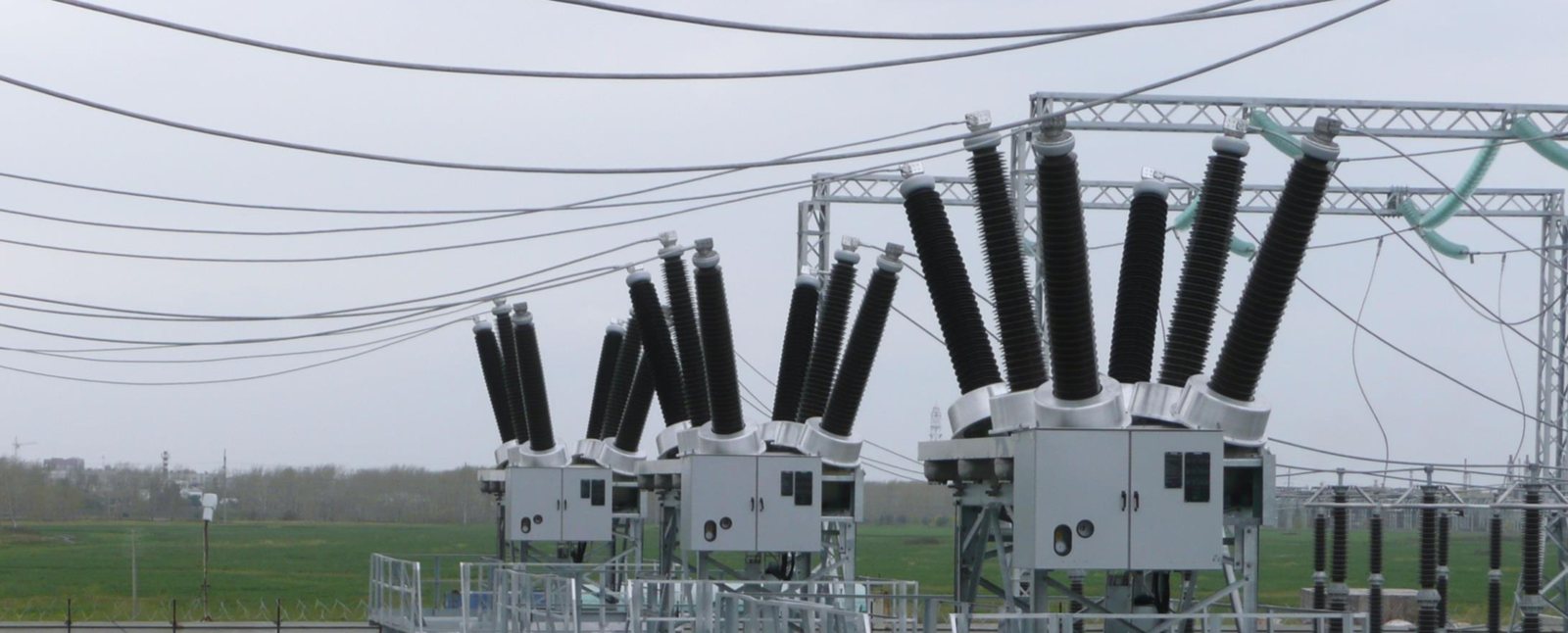
Key facts
- Two series: dead-tank 3AP1 DT (110–220 kV) and 3AP2 DT (330–500 kV); live-tank 3AP1 FG (110–220 kV) and 3AP2 FI (330–500 kV).
- Highest operating voltage 72.5–550 kV; rated current 2,500–5,000 A; breaking current 31.5–63 kA.
- Three-pole and single-pole versions; spring-operated mechanism.
- Dead-tank breakers come with built-in toroidal current transformers; the medium is a mixture of SF6 and a fluorocarbon (pure SF6 on request).
- The assembly plant is designed to build up to 350 breakers a year; service from −60 to +55 °C.
Two series
Dead-tank SF6 circuit breakers 3AP1 DT and 3AP2 DT, 110–500 kV
Dead-tank SF6 circuit breakers 3AP1 DT (110–220 kV) and 3AP2 DT (330–500 kV) for a highest operating voltage of 72.5–550 kV: rated current 3,150–4,000 A, breaking current 40–63 kA. Three-pole and single-pole versions; compact built-in toroidal current transformers; service from −60 to +55 °C; the insulating and arc-quenching medium is a mixture of SF6 and a fluorocarbon (pure SF6 on request); an interrupter designed for minimum operating energy; spring-operated mechanism.
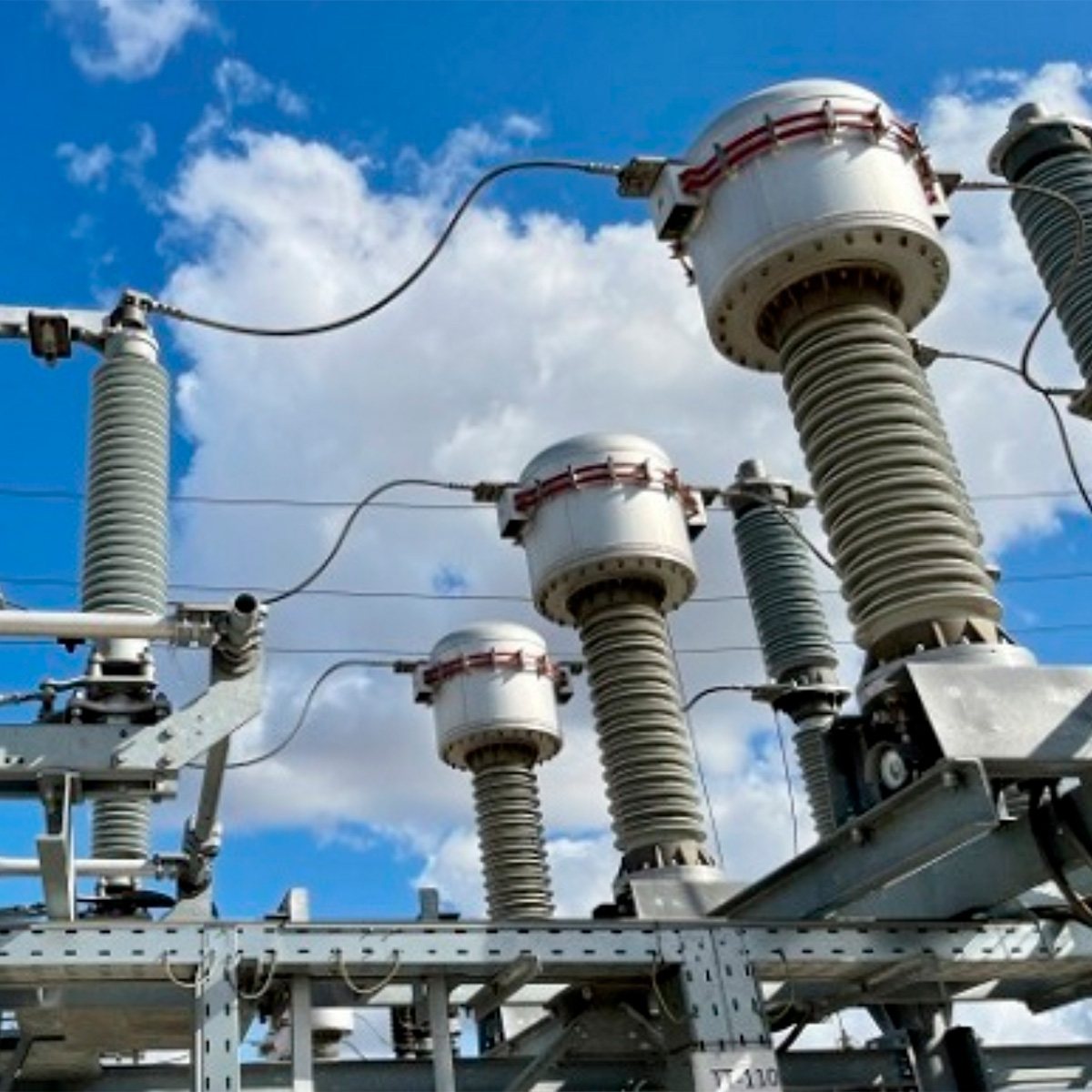
Live-tank SF6 circuit breakers 3AP1 FG and 3AP2 FI, 110–500 kV
Outdoor live-tank SF6 circuit breakers: 3AP1 FG for 110–220 kV (72.5–245 kV rated voltage) and 3AP2 FI for 330–500 kV (362–550 kV). Rated current up to 5,000 A, breaking current up to 63 kA, three-pole and single-pole designs, spring-operated mechanism, operation from −60 to +55 °C. The assembly plant for dead-tank and live-tank breakers can produce up to 350 units a year.
How an SF6 circuit breaker works and quenches the arc
An SF6 circuit breaker interrupts current in a sealed interrupter filled with SF6 gas. The breaker consists of poles and an operating mechanism — either common to all three poles or one per pole. Each pole contains an interrupter with contacts and an insulating nozzle inside a housing: an earthed tank in a dead-tank breaker or an insulator on a support column in a live-tank breaker. A short-circuit current is broken as follows:
- the mechanism parts the contacts and an arc strikes between them;
- pressure in the interrupter rises and a gas flow through the nozzle cools the arc;
- at current zero the arc goes out: SF6 molecules capture free electrons and the gap quickly loses its conductivity;
- the gap recovers its dielectric strength and withstands the recovery voltage of the system.
The blast pressure comes either from a piston moved by the mechanism (puffer interrupter) or from the heat of the arc itself (self-compression, or self-blast, interrupter) — in which case the mechanism spends its energy mainly on moving the contacts. The 3AP series interrupters use the self-compression principle: with short-circuit currents the arc raises the pressure, so a spring-operated mechanism is sufficient for them.
Dead-tank or live-tank: how to choose
| Feature | Dead-tank 3AP1 DT / 3AP2 DT | Live-tank 3AP1 FG / 3AP2 FI |
|---|---|---|
| Where the interrupter sits | in an earthed tank | on an insulating column at live potential |
| Built-in current transformers | yes — compact toroidal units on the bushings | no |
| Rated current | 3,150–4,000 A | 2,500–5,000 A |
| Rated breaking current | 40–63 kA | 31.5–63 kA |
| Insulating and arc-quenching medium | mixture of SF6 and a fluorocarbon (pure SF6 on request) | SF6 |
| Version | three-pole and single-pole | three-pole and single-pole |
| Operating mechanism | spring-operated | spring-operated |
| Operating temperature | −60 to +55 °C | −60 to +55 °C |
Why an SF6 and fluorocarbon mixture is used
The mixture keeps the gas from liquefying in severe frost. Depending on the filling pressure, pure SF6 begins to liquefy at roughly −25 to −35 °C: gas density falls, and with it the dielectric strength and breaking capacity of the breaker.
The fluorocarbon R-14 (tetrafluoromethane, CF4) boils at −128 °C and remains a gas. The partial pressure of SF6 in the mixture is lower, so it does not condense down to −60 °C, while the interrupting characteristics stay practically unchanged. The lower the design temperature, the higher the share of CF4. Where such frosts do not occur, a dead-tank breaker can be ordered with pure SF6.
Selection by voltage class
Network class 110 kV → highest operating voltage 145 kV
Network class 220 kV → highest operating voltage 245 kV
Network class 330 kV → highest operating voltage 362 kV
Network class 500 kV → highest operating voltage 550 kV
Circuit breakers for a 220 kV network: what to consider
Both types rated 245 kV and 4,000 A suit a 220 kV network: the dead-tank 3AP1 DT with a breaking current of 63 kA and the live-tank 3AP1 FG with 50 kA. 245 kV is the IEC highest voltage for equipment in the 220 kV class; GOST 721-77 sets 252 kV for this class, so the value is checked against the customer's technical requirements. The choice between the types depends on the conditions of the bay:
- Short-circuit current. The breaking current must be no lower than the calculated short-circuit current at the point of installation, allowing for network growth; if the calculation exceeds 50 kA, only the dead-tank 3AP1 DT of the two series fits.
- Current transformers. On the dead-tank breaker they are built in as toroidal units on the bushings; a live-tank breaker needs stand-alone current transformers, with their own supports and space in the switchyard bay.
- Single-phase auto-reclosing. Reclosing one phase needs a mechanism on each pole — both series are available in a single-pole version.
Selection requires the network class, calculated short-circuit current, bay current, current transformer requirements, mechanism version and minimum ambient temperature. These are given in the enquiry data sheet or in the request for a proposal.
Breaking current by voltage class
| Series | 72.5 kV | 145 kV | 245 kV | 362 kV | 550 kV |
|---|---|---|---|---|---|
| Dead-tank 3AP1 DT / 3AP2 DT | 3,150 A · 40 kA | 3,150 A · 40 kA | 4,000 A · 63 kA | 4,000 A · 63 kA | 4,000 A · 63 kA |
| Live-tank 3AP1 FG / 3AP2 FI | 2,500 A · 31.5 kA | 4,000 A · 40 kA | 4,000 A · 50 kA | 5,000 A · 63 kA | 5,000 A · 63 kA |
SF6, vacuum or oil: types of circuit breaker
SF6 circuit breakers are the main type for new 110–750 kV substations. Vacuum circuit breakers for 110 kV are already made but are still rarely used.
| Type | Where used | Features |
|---|---|---|
| Oil | existing 6–220 kV substations of earlier construction | fire risk; oil replacement and treatment |
| Air-blast | existing 110–750 kV substations | needs a compressor plant and air treatment |
| SF6 | new 110–750 kV substations, GIS | compact; gas density monitoring and gas accounting |
| Vacuum | 6–35 kV networks; rarely at 110 kV | at 220 kV and above, mostly prototypes so far |
When substations are refurbished, oil and air-blast breakers are usually replaced with SF6 breakers, which removes the need for oil handling and compressed-air systems.
Service and testing
Service for high-voltage equipment 110–750 kV
We service GIS, SF6 circuit breakers, disconnectors and earthing switches, current and voltage transformers and surge arresters rated 110–750 kV: preliminary inspection, diagnostic survey, maintenance without pumping out the SF6, complex repair at the works, emergency stock, upgrades, installation supervision and training. Testing is done by our own test laboratory up to 750 kV. We operate in Russia, Belarus, Kazakhstan and Uzbekistan.
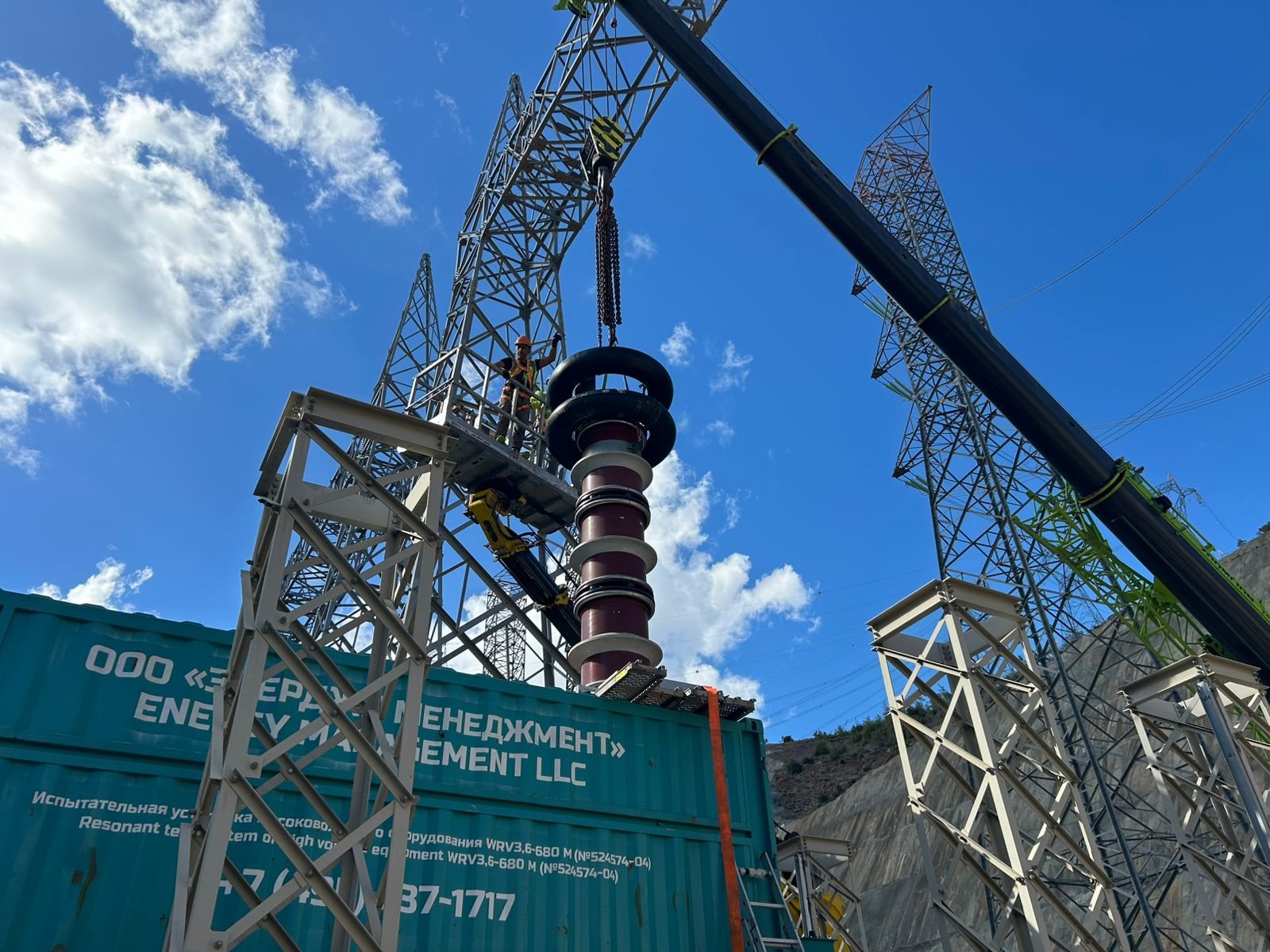
High-voltage test laboratory: on-site testing of 110–750 kV equipment
We test GIS, SF6 circuit breakers, disconnectors and current and voltage transformers at the installation site with two mobile resonant test systems, WRV 3.6/680 M and WRV 1.5/680 G. The laboratory is registered with Rostechnadzor (certificate No. 9834 of 20 December 2024). We travel to substations in Russia and the countries where we work.
SF6 handling and breaker maintenance
SF6 is a potent greenhouse gas and is not released into the atmosphere during work on equipment. It is on the list of greenhouse gases whose emissions are subject to state accounting in Russia (Government Order No. 2979-r of 22 October 2021). The quality of new gas is specified by IEC 60376:2018. During repairs the gas is recovered into cylinders, reclaimed and, after analysis, reused under IEC 60480:2019; IEC 62271-4:2022 sets out the gas handling procedures and safety measures.
Under the service contract, breaker maintenance is carried out without pumping out the SF6 or opening the breaker — on request or after 12 years; complex repairs, with the SF6 pumped out and the breaker dismantled, are done at the works — on request or after 25 years. Acceptance tests and timing measurements of the breakers are performed by the company's high-voltage test laboratory (registration certificate No. 9834 of 20 December 2024). The full scope of work is on the high-voltage equipment service page.
Project
Rosseti — MES of Siberia · 220 kV TsRP substation
1,920 sets of GIS equipment
Documents
Questions and answers
Dead-tank or live-tank: which should you choose?
In a dead-tank breaker the interrupter sits in an earthed tank and the built-in toroidal <a class="term-link" href="../glossary/current-transformer/index.html" title="What is a current transformer">current transformers</a> are mounted on the bushings, so separate transformers are not needed. In a live-tank breaker the interrupter sits on an insulating column at live potential; rated current reaches 5,000 A on the 3AP2 FI.
Which breaker suits a 110 kV network?
Highest operating voltage 145 kV: the dead-tank 3AP1 DT (3,150 A, 40 kA) or the live-tank 3AP1 FG (4,000 A, 40 kA).
What operating mechanism do the breakers have?
A spring-operated mechanism; in both series the interrupter is designed for minimum operating energy.
How many breakers can the assembly plant produce?
The plant is designed to build up to 350 breakers a year — dead-tank and live-tank. Acceptance tests at the substation can be carried out by the company’s test laboratory.
Who services the breakers after delivery?
The company's service centre: preliminary inspection, diagnostics, <a class="term-link" href="../glossary/maintenance-and-overhaul/index.html" title="What is maintenance, medium and major overhaul">maintenance</a> without pumping out the SF6, complex repairs at the works, emergency stock and timing measurements by the test laboratory.
Why do dead-tank breakers use a mixture of SF6 and a fluorocarbon?
To keep the gas from liquefying in frost. Depending on the filling pressure, pure SF6 begins to liquefy at roughly −25 to −35 °C, and breaking capacity falls. Tetrafluoromethane (CF4) remains a gas and the partial pressure of SF6 in the mixture is lower, so with the mixture the breaker is rated for operation down to −60 °C.
How does an SF6 circuit breaker differ from a vacuum circuit breaker?
The arc is quenched by different media: a flow of SF6 or a vacuum inside a sealed interrupter. Vacuum breakers are the main type for 6–35 kV networks; they are rarely used at 110 kV, and at 220 kV and above they are mostly prototypes so far. SF6 remains the main type for substations of 110 kV and above.
Expert in charge
High-voltage equipmentManufacturers' names and designations are used to identify the equipment we supply and service. Trademarks belong to their respective owners. Energy Management LLC is an independent engineering and service company.