
IT and cybersecurity for industrial enterprises
We design and support the IT infrastructure of industrial enterprises: audits, virtualisation and fault-tolerant clusters, migration to Russian platforms, remote monitoring and analytical systems. We protect process control systems: security assessment, network security, categorisation of critical information infrastructure and the measures required by Federal Law 187-FZ, plus a test bench for security tools.
Lines of work
IT · 7 services
- IT infrastructure audit and design
- virtualisation-based systems
- migration to Russian platforms, operating systems and hardware and software complexes
- remote monitoring and management of the enterprise and its processes
- simulators and plant models
- information and analytical systems
- business intelligence
Security · 4 services
- security assessment of information systems
- network security
- support for the modernisation of control system hardware and software complexes
- a test bench for information security tools
Experience of implementing the measures required by Federal Law 187-FZ.
IT infrastructure audit and migration to Russian platforms
A move to Russian platforms starts with an IT infrastructure audit. We check whether the information system meets the business objectives, the company’s own requirements and the recommendations of the hardware and software manufacturers. Based on the results, we propose virtualisation-based solutions and a plan for migration to Russian operating systems, platforms and hardware and software complexes.
Questions a pre-migration audit answers
- which servers, storage systems, network equipment and software the enterprise runs, in which versions, and whether they are still supported;
- how the systems depend on each other: which applications, databases and data exchanges a change of platform will affect;
- which services stop if a single server fails and where a fault-tolerant cluster is needed;
- which information protection requirements apply — for critical information infrastructure (CII) objects, taking the assigned significance category into account.
We test the solutions end to end before the switchover so that the new system can be operated and upgraded in future. For servers that must not stop, we build clusters on HyperSphere (ГиперСфера) high-availability clustering software by STR LLC — see the HyperSphere fault-tolerant cluster page. Replacing the process control system itself is a separate project: see migration from SPPA-T3000 and PCS7.
For significant CII objects, the move to Russian solutions is required by regulation. Since 1 January 2025, public authorities and customers purchasing under Federal Law 223-FZ (other than organisations with municipal participation) have been prohibited from using foreign software on the significant CII objects they own, unless federal law provides otherwise (subparagraph (b) of paragraph 1 of Presidential Decree No. 166 of 30 March 2022). Government Resolution No. 1912 of 14 November 2023 sets out how CII subjects move to the preferential use of trusted hardware and software complexes on their significant objects; the transition is to be completed by 1 January 2030.
Remote monitoring and secure remote access
Remote monitoring gives engineers online data from the equipment and the process: they analyse it without travelling to site, and the plant personnel receive advice in abnormal and emergency situations. One example is remote monitoring and diagnostics of turbine units.
In this arrangement, the data of each turbine unit is collected by a server on site. The server is separated from the external network by a demilitarised zone (DMZ) between firewalls, and the data travels to the diagnostic centre across the internet over secure VPN channels. One diagnostic centre with a diagnostic server receives data from several units.
A communication channel into the process network is always a point of risk, so we design monitoring together with protective measures:
- hardware and software to protect connections and authenticate users;
- industrial antivirus and protection of external data channels;
- specialised software for secure remote access.
Trends collected remotely help to plan on-site vibration diagnostics of turbines and compressors and inspections.
Information and analytical systems, BI and data analysis
Information and analytical systems collect process data and turn it into indicators for plant operators and management.
| System | What it does |
|---|---|
| Calculation of technical and economic performance indicators | calculates the performance indicators of the equipment and the plant — for example, output, specific fuel consumption and efficiency |
| Process data acquisition and calculation | collects data from the control systems and calculates process parameters from it |
| Data bus integration | connects universal data buses; algorithms and mappings for data transfer between systems |
| AI-based data analysis | data mining — finding patterns in data; predictive analytics — forecasting how parameters will change; machine vision — recognising objects in images |
| Business intelligence (BI) | projects on Russian-developed BI systems: ML analysis and data mining, cross-filtering and drill-down, shared and personal dashboards, consolidation of data from any source, a flexible role model and security rules |
Another line of work is process control simulators and plant models that work in a single environment with the control platform. For example, testing of the digital model of a 2.4 MW Howden steam turbine has been completed to prepare its control system for commissioning. See the digital twins and simulators page for details.
Fault-tolerant cluster on HyperSphere software
Two servers with automatic failover of virtual machines: in FT mode without stopping the machine, in HA mode by restarting it on the standby server; a replacement for VMware vSphere and Stratus everRun. Our specialists are certified in its administration.
Categorisation of CII objects and control system protection under Federal Law 187-FZ
Subjects of critical information infrastructure are required to identify and categorise their objects and to protect them. We carry out the whole job — from the survey to the rollout of the protection system.
- 1
A survey of the facility and an inventory of its systems
- 2
A CII categorisation report
- 3
Design and rollout of the protection system
FSTEC of Russia licence for the technical protection of confidential information
The company carries out information protection work under a licence of FSTEC of Russia, the Federal Service for Technical and Export Control, for the technical protection of confidential information: No. L024-00107-77/01590240 of 4 December 2024, granted by order No. 585-l of 4 December 2024. The licensed activity is carried out at 7 Bronnitskaya Street, Podolsk, Moscow Region. The scope of work below follows the extract from the FSTEC of Russia licence register.
| Licensed work | What it means for the customer |
|---|---|
| Design in a protected configuration of information systems and facilities, of rooms housing information systems that require protection, and of protected rooms | design documentation for an information system, a process control system segment or a room with information protection measures built in from the start |
| Assessment of the protection of confidential information against unauthorised access and modification in information systems and facilities | verification that measures against unauthorised access have been implemented and are effective |
| Installation, assembly, set-up, testing and repair of information security tools | on-site deployment, testing and repair of software and software-and-hardware tools: information security tools, protected data processing tools and tools for monitoring the effectiveness of information protection |
If a CII subject engages a contractor to secure a significant object, the contractor must hold a licence for the technical protection of confidential information and/or of information constituting a state secret, depending on the information the object processes (clause 11 of the Requirements approved by FSTEC of Russia Order No. 235 of 21 December 2017). The licence document is on the company licences and approvals page.
A test bench for information security tools
A test environment that reproduces a segment of the control system: security tools are checked for compatibility with the control systems and for their effect on the process before they are rolled out at the facility.
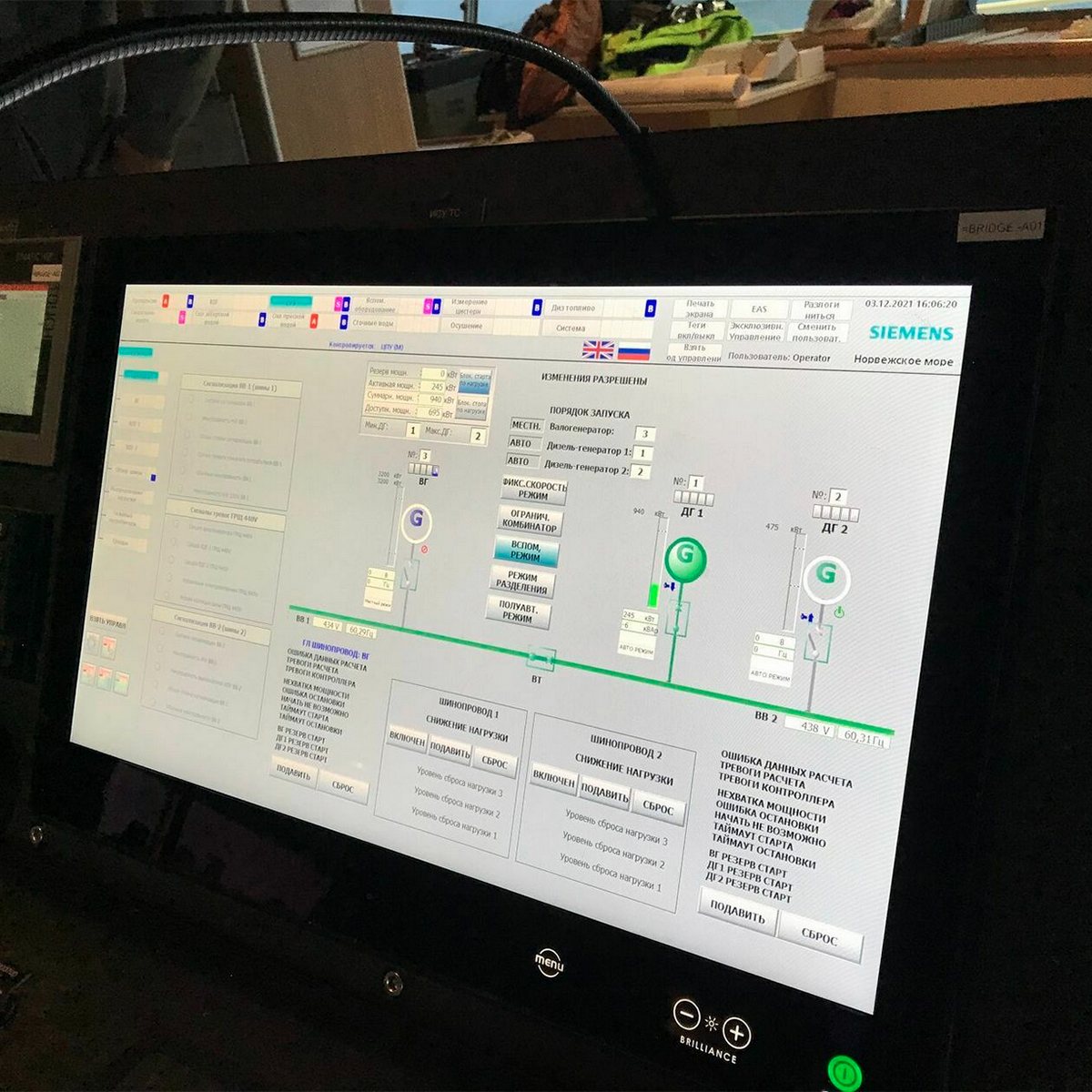
The test bench: equipment and pre-deployment checks
The test bench has the necessary hardware — controllers, servers and communication equipment — and all SPPA-T3000 software versions available in Russia. It is used to test updated antivirus signature databases and Kaspersky Industrial CyberSecurity (KICS) software updates for compatibility with systems based on PCS7 and SPPA-T3000.
These checks are needed because an antivirus database update or a security tool update can disrupt the servers and operator stations of the control system. It is therefore good practice to install at the facility only a version whose compatibility has been confirmed on a test bench, and to schedule the update itself for a window agreed with the operations team.
Partnership
In April 2023 the company was a partner of a Kaspersky Lab hackathon on cyber-immune development: our experts set the task, advised the teams and assessed the results.
The organiser's name is given as a statement of our participation. Trademarks belong to their respective owners.
What to include in your request
A general description of the task and the systems is enough for a first estimate of the scope. Please state in your request:
- the objective: IT infrastructure audit, migration, a fault-tolerant cluster, security assessment or CII categorisation;
- a list of the information systems and process control systems with their software and operating system versions;
- an outline network diagram: the boundaries of the process and corporate segments and the remote access channels;
- whether the enterprise has significant CII objects and which categories they have been assigned;
- operating constraints: which systems must not be stopped and when work is possible.
Detailed network diagrams and system configurations are sensitive information. If they are classified as restricted, we agree separately on how they are to be handed over.
Brochure
Related
Questions and answers
What is categorisation of critical information infrastructure?
It is the procedure set by Federal Law 187-FZ and the Categorisation Rules (Government Resolution No. 127): the CII subject’s commission identifies the objects that match the standard objects in the sector lists of typical CII objects, assesses their significance against the criteria and assigns a category or decides that none is required. The decision is recorded in a categorisation report; within 10 working days of its approval, information on the results is sent to FSTEC of Russia.
Where should a move to Russian platforms start?
With an IT infrastructure audit: an inventory of the systems, their dependencies and a plan for <a class="term-link" href="../glossary/control-system-migration/index.html" title="What is control system migration to a Russian platform">migration</a> to Russian operating systems, virtualisation and hardware and software complexes.
What is the test bench for security tools?
A test environment reproducing a segment of the control system, where security tools are checked for compatibility with the control system before they are rolled out at the facility.
How does an IT infrastructure audit differ from a security assessment?
An IT infrastructure audit shows whether the information system meets the business objectives, the company’s own requirements and the recommendations of the hardware and software manufacturers; its results are the basis for an upgrade or migration plan. A security assessment checks the security of the IT infrastructure, information systems and software products: it identifies possible attack vectors and gives recommendations on countering them and on preventive measures.
Does a CII subject have to switch to Russian software?
For significant CII objects, i.e. those assigned a significance category as a result of categorisation, such requirements are in place. On these objects, public authorities and customers purchasing under Federal Law 223-FZ have been prohibited since 1 January 2025 from using foreign software unless federal law provides otherwise (Presidential Decree No. 166), and by 1 January 2030 CII subjects are to move to the preferential use of trusted hardware and software complexes (Government Resolution No. 1912). The results of categorisation are therefore needed first.
Engineering team
IT and cybersecurityPlatform and product names are used to identify the systems we service. Trademarks belong to their respective owners. Energy Management LLC is an independent engineering company.