
Steam turbines 8 kW – 80 MW
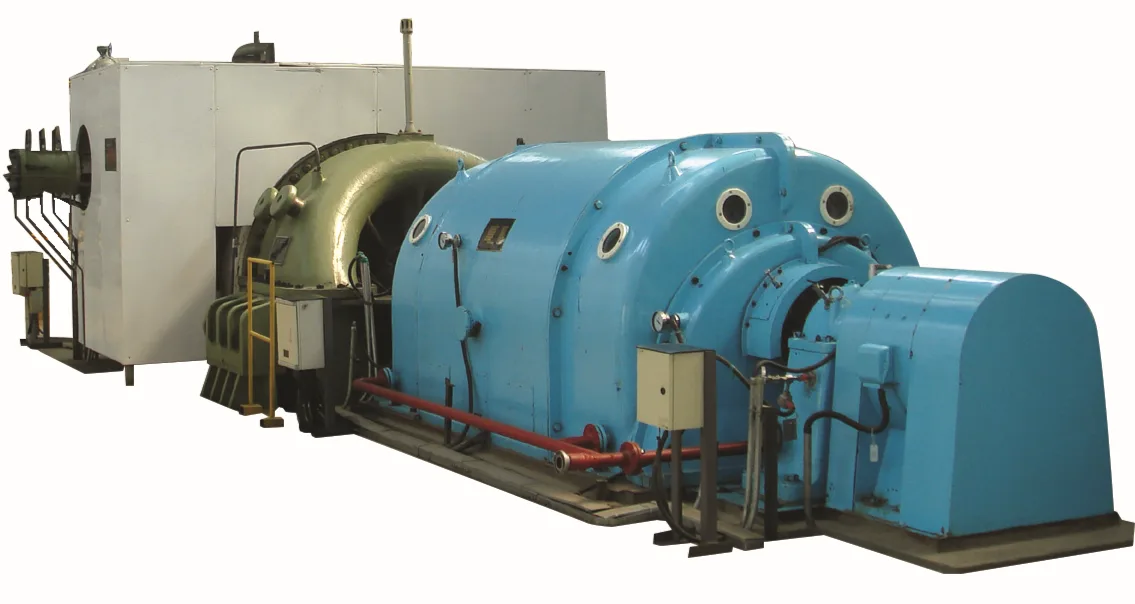
Machines for driving compressors, pumps, fans and other equipment and for generating power, rated from 8 kW to 80 MW. Condensing and back-pressure designs, with steam extraction; built to API 611/612 and NEMA SM23; steam up to 540 °C and 14 MPa. We select the machine for the duty and supply it.
Key facts
- Unit output of mechanical drive turbines is 8 kW – 50 MW, of turbine generator sets 2.5–80 MW.
- Speed 1,000–15,000 rpm; gearboxes let the machine run at its optimum speed.
- Inlet steam up to 540 °C and 14 MPa (abs.); back pressure up to 6.5 MPa.
- Built to API 611/612 and NEMA SM23; packaged on a single baseplate.
- Mechanical drive turbines are in service at more than 150 plants in 40 countries.
- Small turbines RLA, RLVA and RLH are single-stage, up to 1,865 kW and up to 6,000 rpm.
- Manufacturing experience since 1958; the control system can be built on a Russian hardware and software platform.
Series
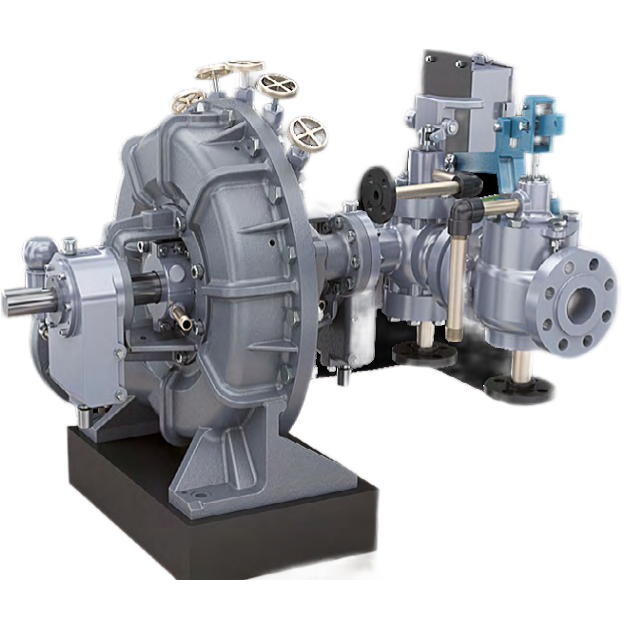
Small steam turbines RLA, RLVA, RLH — up to 1,865 kW
Single-stage steam turbines for driving pumps and fans and for starter duty in refining, petrochemicals, chemicals and food processing. Output up to 745 kW (RLA, RLVA) and up to 1,865 kW (RLH), speed up to 6,000 rpm, steam up to 510 °C and 97 bar. Simple design, easy maintenance; the modular architecture adapts to the customer’s standards.
8–1,865 kW
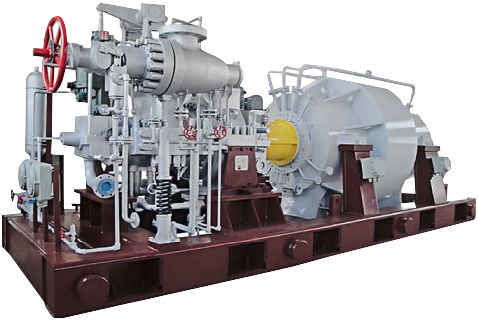
Mechanical drive steam turbines 8 kW – 50 MW
Small and medium-power steam turbines driving boiler feed and cooling water pumps, compressors, fans, induced-draught fans and crushers: 8 kW – 50 MW, 1,000–15,000 rpm, steam up to 540 °C and 14 MPa(a). Four designs — condensing and back-pressure, with or without steam extraction; packaged on a single baseplate to API 611/612.
8 kW – 50 MW
Steam turbines for power generation 2.5–80 MW
Steam turbine generator sets of 2.5–80 MW for captive generation at industrial plants and power stations: 3,000–11,000 rpm, steam up to 540 °C and 14 MPa(a). Condensing and back-pressure designs, downward, upward or axial exhaust; a gearbox at high turbine speed. Compliance with API 612 and NEMA SM23.
2.5–80 MW
Types of steam turbine
Steam turbines are classified by where the steam goes after expansion: all of it to a condenser, all of it to process users, or part of it to users from an intermediate stage. The type determines the plant layout, the power obtained from each tonne of steam and whether a cooling system is needed. The type names follow the Russian standard GOST 23269-78 (stationary steam turbines, terms and definitions); steam data by design are given in the summary table below.
| Type | Where the steam goes | When it is chosen |
|---|---|---|
| Condensing | to a condenser under vacuum | the highest output from each tonne of steam is needed and there is no use for the steam after the turbine; a condenser and water or air cooling are required |
| Back-pressure | to process users at above-atmospheric pressure | the plant has a steady demand for process steam or heat; the turbine uses the pressure drop that would otherwise be lost in a pressure-reducing station |
| Controlled extraction | part of the steam leaves an intermediate stage at a set pressure; the rest goes to the condenser or to users at back pressure | demand for steam and power varies with the season or the production mode |
Summary table
| Parameter | Condensingmechanical drive | Condensing with extractionmechanical drive | Back pressuremechanical drive | Back pressure with extractionmechanical drive | Condensingpower generation | Back pressurepower generation |
|---|---|---|---|---|---|---|
| Inlet pressureMPa (abs.) | 0.12–10.5 | 1.0–10.5 | 0.5–14 | 1.0–14 | 0.17–13.2 | 2.0–13.2 |
| Inlet temperature°C | 105–540 | 180–540 | 152–540 | 180–540 | 470–540 | 470–540 |
| Steam extractionMPa (abs.) | — | 0.2–5.0 | — | 0.5–6.5 | — | — |
| Steam exhaustMPa (abs.) | 0.007–0.025 | 0.007–0.02 | 0.12–6.5 | 0.12–6.5 | 0.005–0.3 | 0.25–4.0 |
| Exhaust direction | — | — | — | — | down, up, axial | down, up, axial |
| Output | 8–50,000 kW | 8–50,000 kW | 8–50,000 kW | 8–50,000 kW | 2.5–75 MW | 2.5–75 MW |
| Speedrpm | 1,000–14,200 | 1,000–14,200 | 1,000–15,000 | 1,000–15,000 | 3,000–11,000 | 3,000–11,000 |
Steam turbine design and operating principle
A steam turbine converts the energy of steam into shaft rotation. Steam from the boiler passes through the trip valve and the control valves into the nozzles, where it expands and its pressure is converted into velocity; the jet then gives up its energy to the rotor blades.
In a multistage turbine the steam expands in several stages in succession: each stage uses part of the pressure drop, so internal efficiency is higher than in a single-stage machine. Single-stage small turbines RLA, RLVA and RLH with a Curtis wheel are simpler in design and easier to maintain.
The speed governor holds the set speed by opening and closing the control valves as the load changes. The quick-closing trip valve shuts off the steam when a protection trips, including on overspeed. The main assemblies are the casing with nozzles, the rotor with blades, the shaft end seals, the journal and thrust bearings and the lubrication system; multistage impulse turbines also have diaphragms between the wheels.
Design features
The turbines are built to API 611/612 and supplied either as standard machines or packaged on a single baseplate — which removes the need to open the flow path during erection and shortens the time to handover. A control system on a Russian hardware and software platform is available.
- complete manufacturing cycle at the works
- quick-closing trip valve
- mechanical or electronic speed governor (for example Woodward, NEMA Class A)
- horizontally split casing
- tilting-pad journal bearings
- self-aligning spherical and tilting-pad bearings
- protection system trip valve separate from the control valve
- carbon-ring or labyrinth seals
- removable steam strainer in the trip valve
- thermal insulation to API standards (on request)
- forced-feed or splash lubrication
- control system and instruments to the customer’s choice
- manufacturing experience since 1958
Standards: API 611, API 612 and NEMA SM23
The standards set minimum requirements for the design, materials, testing, lubrication and control system of the turbine. The customer states which standard applies in the technical specification or the enquiry data sheet.
| Standard | Edition | Turbines covered |
|---|---|---|
| API 611 | 6th, June 2022 | general-purpose, for driving equipment that is usually spared or in non-critical service; typically steam up to 48 bar g (700 psig) and 400 °C and speed up to 6,000 rpm |
| API 612 | 8th, November 2020 | special-purpose, for uninterrupted, continuous operation in critical service, usually with no installed spare; not limited by steam conditions, power or speed |
| NEMA SM23 | 1991, reaffirmed in 1997 and 2002 | mechanical drive steam turbines; the standard classifies speed governing systems into classes A–D by how precisely they hold speed, and NEMA SM24 for turbine generator sets uses the same classification |
Applications
What they drive
- boiler feed and cooling water pumps
- compressors
- forced-draught and supply fans
- induced-draught fans
- crushers
- generators — turbine generator sets of 2.5–80 MW
How to select a steam turbine
First decide on the duty: driving a machine or generating power. A mechanical drive turbine turns a pump, compressor or fan directly or through a gearbox and follows the load by changing speed without a frequency converter. A turbine generator set keeps the generator at a constant speed.
For a technical and commercial proposal we need:
- the duty: which machine the turbine drives or what electrical output is required;
- inlet steam: pressure, temperature and flow;
- exhaust pressure, extraction pressure and flow;
- power and speed of the driven machine; for generation, grid frequency and load profile;
- the standard (API 611 or API 612) and control system requirements.
The enquiry data sheet collects this information. In the request form at the bottom of the page you can list it in the Task field or attach it as a file, such as a data sheet or a technical specification.
Control system
We equip steam turbines with a control system built on a Russian hardware and software platform — the Ezan platform with Katren and Sonet controllers.
Delivery, commissioning and service
On site a packaged turbine is set on its foundation, aligned with the driven machine where required, and connected to the steam lines, cooling water lines and cables. Our engineers carry out installation supervision and commissioning.
Our service team carries out maintenance and steam turbine repair for machines from 750 kW to 80 MW. For Siemens Energy and Dresser-Rand turbines we supply spare parts: trip valves, governing and steam distribution parts, rotors, diaphragm carriers, blades, nozzle blocks, bearings and seals.
An example from practice: in July 2024 the company reported that its specialists had completed testing of a digital model of a 2.4 MW single-stage Howden steam turbine with nozzle-group steam admission. The model was used to prepare the automatic control system for commissioning at a customer’s facility.
In 2024 the company received the certificates of official partner of New JCM Group and official representative of Hangzhou Chinen Turbomachinery. Both cover the steam turbines of these manufacturers: sales, installation and commissioning supervision, spare parts and service.
Manufacturer names and designations are given to identify the equipment we supply and service. Trademarks belong to their respective owners. Energy Management LLC is an independent engineering company.
Related
Documents
Questions and answers
What types of steam turbine do you supply?
Condensing, condensing with extraction, back-pressure and back-pressure with extraction machines — for <a class="term-link" href="../glossary/mechanical-drive/index.html" title="What is mechanical drive by a turbine">mechanical drive</a> from 8 kW to 50 MW and for power generation from 2.5 to 80 MW. Separately, single-stage small turbines RLA, RLVA and RLH up to 1,865 kW for pumps, fans and starter duty.
To which standards are the turbines built?
<a class="term-link" href="../glossary/mechanical-drive/index.html" title="What is mechanical drive by a turbine">Mechanical drive</a> turbines are built to API 611/612; turbine generator sets to API 612 and NEMA SM23. Thermal insulation to API standards is available on request. The speed governor is mechanical or electronic, for example a Woodward NEMA Class A unit.
What does packaging on a single baseplate give you?
The turbine, the gearbox and the auxiliary systems are assembled and tested at the works on one baseplate. During erection the flow path does not have to be opened, so handover takes less time.
Can steam be extracted for plant needs?
Yes. On mechanical drive turbines with extraction the extraction pressure is 0.2–5.0 MPa (condensing) and 0.5–6.5 MPa (back pressure); the exhaust pressure ranges from 0.007 to 6.5 MPa depending on the type.
Which control system is fitted to the turbine?
The control system and the instruments are chosen by the customer. Supply on a Russian hardware and software platform is available: the Ezan platform with Katren and Sonet controllers.
Who services the turbine after delivery?
Our service engineers: <a class="term-link" href="../glossary/installation-supervision/index.html" title="What is installation supervision">installation supervision</a> and commissioning, inspections, maintenance, medium and major overhauls and spare parts. Our specialists have been trained at the manufacturers’ works; we service Siemens Energy, Dresser-Rand, Mitsubishi Heavy Industries and Howden turbines.
Steam turbine or electric motor: which should drive the machine?
A steam turbine makes sense when steam of suitable conditions is available on site and is needed in the process or for heating after the turbine: the drive then takes its energy from the pressure drop and puts no load on the plant’s power network. Turbine drives are also used where a machine must keep running during a power failure, for example on standby boiler feed pumps. If no spare steam is available, an electric motor is the usual choice.
Can I buy a steam turbine with a generator?
Yes. Turbine generator sets of 2.5–80 MW are supplied together with the generator, in condensing or back-pressure design, with the exhaust facing down, up or axially. Turbine speed is 3,000–11,000 rpm; if it is higher than the generator speed, a gearbox is fitted between them. For sizing we need the steam conditions, electrical output, grid frequency and load profile.
Expert in charge
Rotating equipment service