
Dead-tank SF6 circuit breakers 3AP1 DT and 3AP2 DT, 110–500 kV
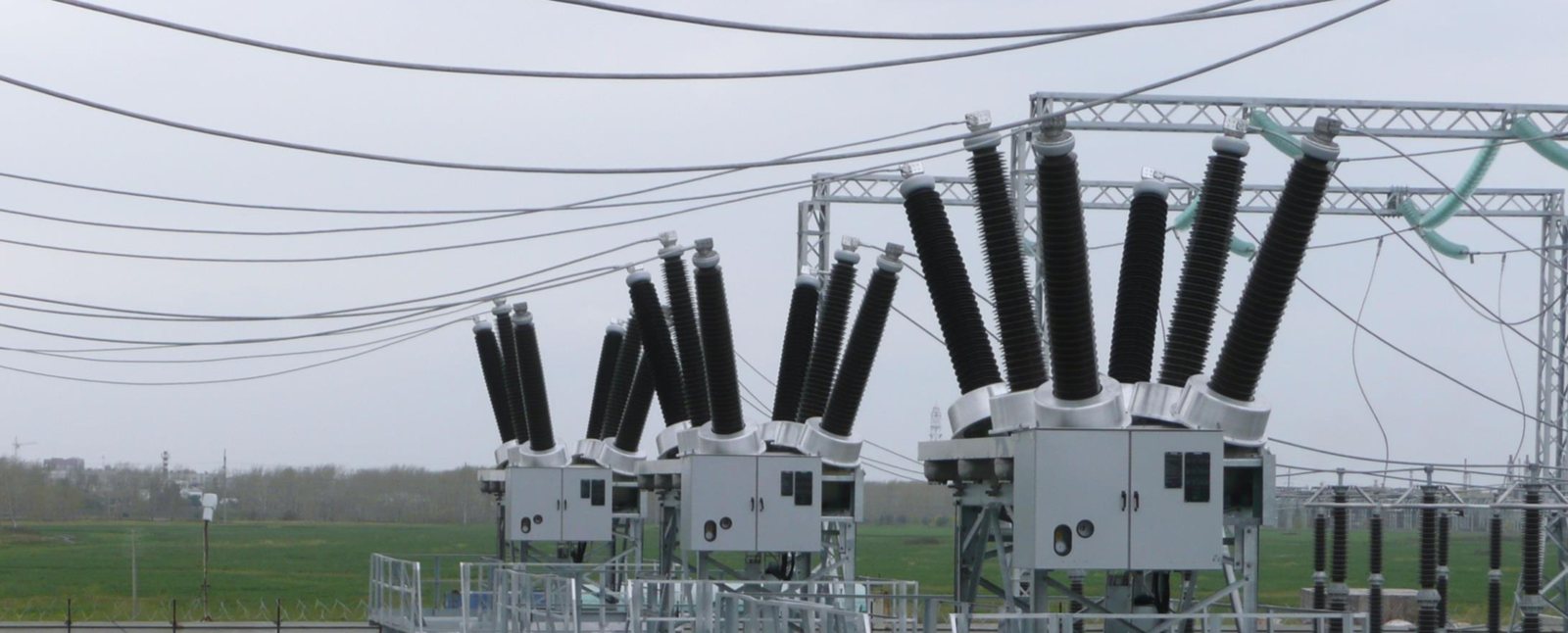
Dead-tank SF6 circuit breakers 3AP1 DT (110–220 kV) and 3AP2 DT (330–500 kV) for a highest operating voltage of 72.5–550 kV: rated current 3,150–4,000 A, breaking current 40–63 kA. Three-pole and single-pole versions; compact built-in toroidal current transformers; service from −60 to +55 °C; the insulating and arc-quenching medium is a mixture of SF6 and a fluorocarbon (pure SF6 on request); an interrupter designed for minimum operating energy; spring-operated mechanism.
Key facts
- 3AP1 DT — 72.5, 145 and 245 kV; 3AP2 DT — 362 and 550 kV.
- Rated current 3,150 A (72.5 and 145 kV) and 4,000 A (245–550 kV); breaking current 40 kA and 63 kA.
- Built-in toroidal current transformers on the bushings — separate transformers are not needed.
- A mixture of SF6 and a fluorocarbon for service at −60 °C; pure SF6 on request.
- An interrupter designed for minimum operating energy; spring-operated mechanism.
Design
- three-pole and single-pole versions
- compact built-in toroidal current transformers
- operating temperature from −60 to +55 °C
- insulating and arc-quenching medium — a mixture of SF6 and a fluorocarbon (pure SF6 on request)
- interrupter designed for minimum operating energy
- spring-operated mechanism
How a dead-tank breaker differs from a live-tank breaker
The main difference is where the interrupter sits. In a dead-tank breaker it is enclosed in an earthed metal tank filled with SF6 gas, and current reaches it through two bushings on each pole. In a live-tank circuit breaker, 3AP1 FG or 3AP2 FI, the interrupter is mounted on an insulating column at line potential. This leads to practical differences:
- current transformers are built in at the base of the bushings, whereas a live-tank breaker needs separate current transformers in the air-insulated switchgear (AIS) bay;
- the centre of gravity is lower, so the breaker withstands seismic loads better;
- there is no external creepage path across the open contacts: the break is inside the tank, and only the bushings are exposed to pollution;
- as a rule, a dead-tank breaker is heavier, needs a more substantial foundation and holds more SF6 than a live-tank breaker of the same voltage class.
Poles rated 72.5–245 kV have one interrupter unit; poles rated 362 and 550 kV have two, connected in series.
Built-in current transformers
Toroidal current transformers sit in weatherproof housings at the base of both bushings of each pole; according to the manufacturer’s published data, up to three per bushing. With transformers on both sides of the interrupter, the protection zones can overlap: the busbar protection is connected to the transformers on the feeder side and the feeder protection to those on the busbar side, so a fault inside the breaker falls within both zones.
For each bushing, specify the number of cores, their purpose, ratios and accuracy classes: 0.2S or 0.5S for revenue metering, 5P or 10P for protection, to GOST 7746-2015. These data go into the enquiry data sheet for SF6 circuit breakers.
Operation at −60 °C
In severe frost, SF6 at operating pressure starts to liquefy: gas density falls, and with it dielectric strength and breaking capacity. The density monitor first raises an alarm and then blocks the breaker. Two solutions are used in cold climates:
- a mixture of SF6 with a gas that does not liquefy at these temperatures — tetrafluoromethane (CF4, R-14) or nitrogen; an SF6/CF4 mixture keeps practically the same breaking performance, while an SF6/N2 mixture reduces it;
- tank heaters that keep the gas above its liquefaction temperature.
The 3AP1 DT and 3AP2 DT breakers for service down to −60 °C are filled with a mixture of SF6 and a fluorocarbon. Top-ups use a mixture of the composition stated in the breaker’s documentation: adding pure SF6 raises the liquefaction temperature. Performance in the cold is confirmed by low-temperature type tests to IEC 62271-100:2021, which check operating times, contact travel and gas tightness.
Data table
| Parameter | 3AP1 DT72.5 kV | 3AP1 DT145 kV | 3AP1 DT245 kV | 3AP2 DT362 kV | 3AP2 DT550 kV |
|---|---|---|---|---|---|
| Highest operating voltagekV | 72.5 | 145 | 245 | 362 | 550 |
| Rated currentA | 3,150 | 3,150 | 4,000 | 4,000 | 4,000 |
| Rated breaking currentkA | 40 | 40 | 63 | 63 | 63 |
Breaking current by voltage class
| Series | 72.5 kV | 145 kV | 245 kV | 362 kV | 550 kV |
|---|---|---|---|---|---|
| Dead-tank 3AP1 DT / 3AP2 DT | 3,150 A · 40 kA | 3,150 A · 40 kA | 4,000 A · 63 kA | 4,000 A · 63 kA | 4,000 A · 63 kA |
| Live-tank 3AP1 FG / 3AP2 FI | 2,500 A · 31.5 kA | 4,000 A · 40 kA | 4,000 A · 50 kA | 5,000 A · 63 kA | 5,000 A · 63 kA |
Applications
Where they are installed
- air-insulated switchyards of 110–500 kV substations
- generator and transformer bays
- substation refurbishment replacing oil and air-blast breakers
- cold-climate regions — down to −60 °C
Maintenance and testing
Dead-tank breakers are covered by our service for 110–750 kV high-voltage equipment: maintenance is done on site without SF6 recovery or opening the breaker; a complex repair is done at the factory, with SF6 recovery and dismantling.
After installation, the breaker undergoes acceptance tests under the Russian Electrical Installation Code (PUE, 7th edition, clause 1.8.21 “SF6 circuit breakers”), including insulation resistance of the secondary circuits and DC resistance of the main circuit, a power-frequency withstand test of the insulation, minimum operating voltage, characteristics per the manufacturer’s instructions, gas tightness and SF6 moisture content.
For a dead-tank breaker, the scope also covers the built-in current transformers under PUE clause 1.8.17: insulation resistance with a 1,000 V insulation tester, a 1 kV withstand test of the secondary winding insulation, the magnetisation curve, the ratio and the DC resistance of the secondary windings. The ratio and winding resistance must not deviate from the values in the manufacturer’s data sheet by more than 2%.
The company’s high-voltage test laboratory is registered with Rostechnadzor (certificate No. 9834 of 20 December 2024); its permitted tests up to 750 kV include SF6 circuit breakers and current transformers. The laboratory performs circuit breaker timing tests and insulation resistance measurements.
Related
Documents
Questions and answers
How does the 3AP1 DT differ from the 3AP2 DT?
By voltage class and the number of interrupter units: the 3AP1 DT is built for 72.5–245 kV, including 110 and 220 kV networks, with one interrupter unit per pole; the 3AP2 DT for 362 and 550 kV (330 and 500 kV networks) with two. Both carry a rated current up to 4,000 A and a <a class="term-link" href="../glossary/breaking-current/index.html" title="What is the breaking current of a circuit breaker">breaking current</a> up to 63 kA.
Why built-in current transformers?
Compact toroidal transformers on the bushings replace free-standing instrument transformers — fewer foundations and less bay area.
Why a mixture of SF6 and a fluorocarbon?
The mixture does not liquefy at −60 °C and keeps its insulating and arc-quenching properties in a cold climate; pure SF6 is supplied on request for temperate climates.
Which breaker is needed for a 110 kV network?
The 3AP1 DT for a highest operating voltage of 145 kV: 3,150 A, 40 kA.
What should a request for a dead-tank breaker include?
The system voltage class, rated current and breaking current, a three-pole or single-pole version, the minimum site temperature and the filling medium: a mixture of SF6 and a fluorocarbon or pure SF6. For the built-in current transformers, give the purpose, ratios and accuracy classes of the cores on each bushing. These data go into the enquiry data sheet for the circuit breaker.
How often does a dead-tank breaker need maintenance?
Maintenance follows the scope of the breaker’s operating manual. Under the company’s service contract, a diagnostic survey and maintenance without SF6 recovery or opening the breaker are carried out on request or after 12 years; a complex repair with dismantling at the factory is done on request or after 25 years. Between these, an SF6 density monitor with alarm and blocking keeps track of the gas condition.
Expert in charge
High-voltage equipmentManufacturers' names and designations are used to identify the equipment we supply and service. Trademarks belong to their respective owners. Energy Management LLC is an independent engineering and service company.