
Dry gas seals for compressors
Dry gas seals are non-contacting mechanical seals on a compressor shaft in which the gap is held open by a thin gas film; they replace oil seals. We supply dry gas, barrier and labyrinth seals for centrifugal compressors, select them by machine model, and replace and adjust the seal gas systems at the customer's site.
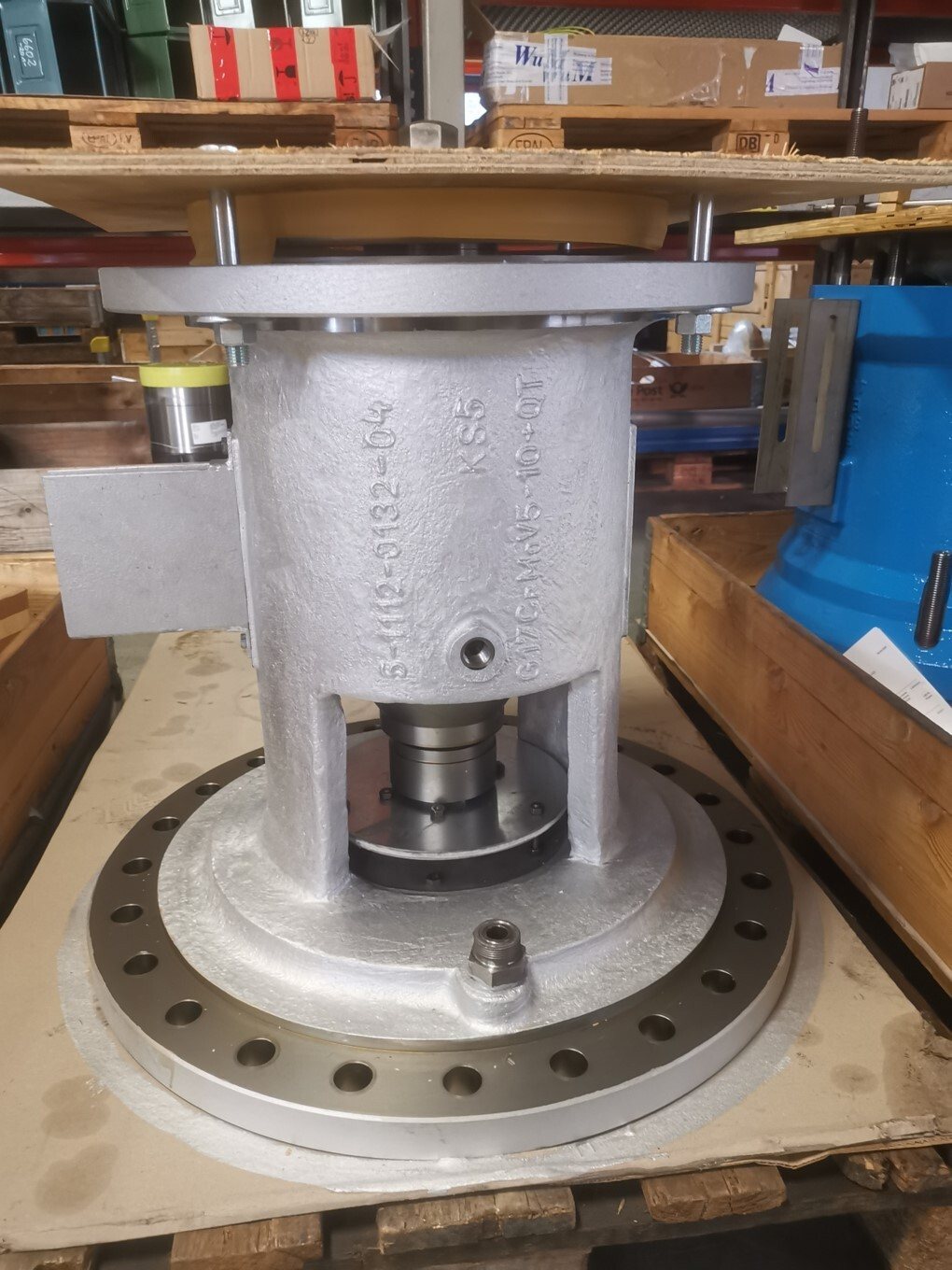
Scope
- selection of dry gas seals by compressor model and serial number
- barrier seals separating the gas seal from the bearing oil cavity
- labyrinth seals for the flow path and shaft
- seal replacement at the customer's site
- adjustment of seal and barrier gas systems: filters, regulators, leakage monitoring
- incoming inspection and accompanying documents
- recommendations on operating the seal systems
Which compressors
| Manufacturer | Models | Service |
|---|---|---|
| Siemens Energy | STC-SH, STC-SV, STC-SR, STC-SX, STC-SP, STC-STO, STC-GV, STC-GVT, STC-GC, STC-GT, STC-GTO, STC-GO, STC-SOF | Siemens Energy spare parts |
| Dresser-Rand | Datum, Datum R, Datum C, Datum A, Datum I (ICS), Datum P | Dresser-Rand spare parts |
| Mitsubishi Heavy Industries · Howden · Kobelco · Hanwha | centrifugal compressor trains | Compressor service |
Manufacturer names and designations are given to identify the equipment we service. Trademarks belong to their respective owners. Energy Management LLC is an independent service company.
How replacement proceeds
- 1
Request
Compressor model and serial number, seal type, symptoms.
- 2
Selection
The seal is selected from the machine documentation.
- 3
Replacement
Removal, fitting, clearance checks and connection of the gas system.
- 4
Adjustment
Seal gas system setting, leakage monitoring at start-up.
Why customers choose us
- 1
End-to-end approach
From diagnostics and the repair plan through to handover into operation.
- 2
Qualified engineers
Extensive experience with Siemens Energy and Dresser-Rand compressors and steam turbines.
- 3
Original parts
Origin confirmed by catalogue numbers, markings and accompanying documents; every batch is inspected by our engineers before shipment.
- 4
Energy Management LLC warranty
The warranty on supplied spare parts is provided by Energy Management LLC; warranty cases are handled by our own specialists.
Causes of failure and recommendations
Why turbines and compressors fail
- operation outside the rules
- unsuitable components
- excessive vibration
- foundation defects or the influence of adjacent equipment
- late replacement of wearing parts
- end of service life
How to extend service life
- regular diagnostics and maintenance
- consumables and parts specified by the manufacturer
- qualified specialists
How a dry gas seal works
The core of the seal is a pair of rings: a rotating ring with micro-grooves on its face and a stationary ring pressed against it by springs. As the shaft turns, the grooves pump gas into the gap between the faces and form a gas film only a few micrometres thick: the rings do not touch, friction and wear are minimal, and the leakage through the gap is small and predictable. The seal is supplied as an assembled cartridge that is fitted into the compressor casing as a single unit.
Process gas compressors usually have a tandem arrangement: the primary seal holds the process pressure, the secondary seal backs it up and limits leakage if the primary fails; between them is an intermediate labyrinth through which the primary leakage is routed to flare or vent. On the bearing side the seal is protected by a barrier (separation) seal: clean nitrogen or air is fed into it to keep oil from the bearing housing away from the gas rings and gas away from the oil.
A seal works only as well as its seal gas is clean and properly conditioned. The seal gas system filters the gas, heats it where necessary to prevent condensation, maintains the required differential pressure against the process and measures the primary leakage — the main indicator of seal condition.
Signs of trouble and typical causes
Most dry gas seal failures are caused not by the rings themselves but by their operating conditions.
- Rising primary leakage — wear or damage of the faces, grooves clogged with deposits, loss of face flatness after overheating.
- Liquid in the seal gas — condensate or oil carry-over from the process; liquid in the gap destroys the gas film and damages the faces within minutes.
- Solid particles — pipe corrosion products, process deposits, a failed filter; particles score the rings.
- Loss of differential pressure of the seal or barrier gas — during shutdown, purging or a pressure drop in the system, process gas or oil enters the gap.
- Reverse rotation and axial shifts of the rotor — after an incorrect shutdown, surge or thrust bearing problems.
- Installation errors — a misaligned cartridge, damaged secondary seals (O-rings, polymer elements), elastomers incompatible with the gas composition.
The first signs are visible in the control system: the primary leakage trend, filter differential, barrier gas temperature and pressure, alarm events. That is why we ask for these data before a seal replacement — the cause is often in the gas system, and a new seal without its adjustment will share the fate of the old one.
What we check before replacement
- seal gas compliance with the requirements: dew point, liquid and particle content, composition — from the customer’s data or samples;
- condition of the seal gas panel: filters and their differential, pressure and differential regulators, heater, leakage flow meters, check valves;
- barrier gas supply: source, pressure, back-up during compressor shutdown;
- rotor position and thrust bearing condition, axial and radial clearances;
- event history: shutdowns, purges, protection trips, previous seal replacements and their running hours.
Based on the check we propose what to replace together with the seal — filter elements, secondary seals, regulators — and which gas system settings to change. The replacement then fixes the cause, not the symptom.
Storage and repair of seals
A dry gas seal cartridge is a precision assembly, and its service life starts in the warehouse. We store, and recommend storing, cartridges in the original packaging, in a dry heated room, in the orientation specified by the manufacturer, free from vibration and temperature swings; elastomer elements have their own shelf life, which has to be considered when buying for stock. Before installation the cartridge is checked for intact packaging and protective elements.
Worn cartridges can usually be refurbished by the seal manufacturer: the faces are re-lapped, secondary seals and springs replaced, the assembly tested. We arrange such refurbishment in agreement with the customer and recommend keeping at least one set per compressor frame size in the emergency stock: when a seal fails the machine is down, and the lead time for a new cartridge is measured in months. The origin of the seals we supply is confirmed by catalogue numbers, markings and accompanying documents; the warranty is given by Energy Management LLC.
Seal gas system: typical upgrades
A seal replacement is often accompanied by an upgrade of the gas system — otherwise the new seal runs under the same conditions that ruined the old one. Typical measures: a coalescing filter ahead of the main filter if there is liquid in the gas; a seal gas heater so that no condensate forms on throttling; a booster or a back-up source (nitrogen) to maintain the differential during shutdown and coast-down; panel upgrades — duplicated filters with changeover on the run, leakage flow meters with trends in the control system, differential alarms.
Each of these measures is assessed on the customer’s data: gas composition, operating modes, failure history. The proposal shows exactly what and why, and the system is tuned after the upgrade at start-up together with the seal replacement.
Projects and related pages

Questions and answers
How do we know a seal needs replacing?
Rising seal gas leakage, a change in pressure drop across the filters and regulators, seal system alarms, traces of oil in the gas cavity. Our engineer will assess the condition from the control system data.
How does a barrier seal differ from a gas seal?
The gas seal keeps the process gas in the flow path; the barrier seal separates it from the bearing oil cavity and keeps oil away from the gas seal.
Do you replace seals on site?
Yes: replacement and seal gas system adjustment are done at the customer's site.
Who provides the warranty?
Energy Management LLC. Warranty cases are handled by our own specialists; the terms are set by the contract.
Engineering team
Rotating equipment service