Customer personnel training
We train the customer's personnel in efficient and safe operation and periodic maintenance of turbines, compressors and high-voltage equipment. Courses are run under a programme agreed with the customer, under a separate contract: on site at the equipment or in a classroom.
What we teach
- design and operating principle of the machine and its auxiliary systems
- safe methods of start-up, shutdown and load control
- periodic maintenance to the scope of the operating manual
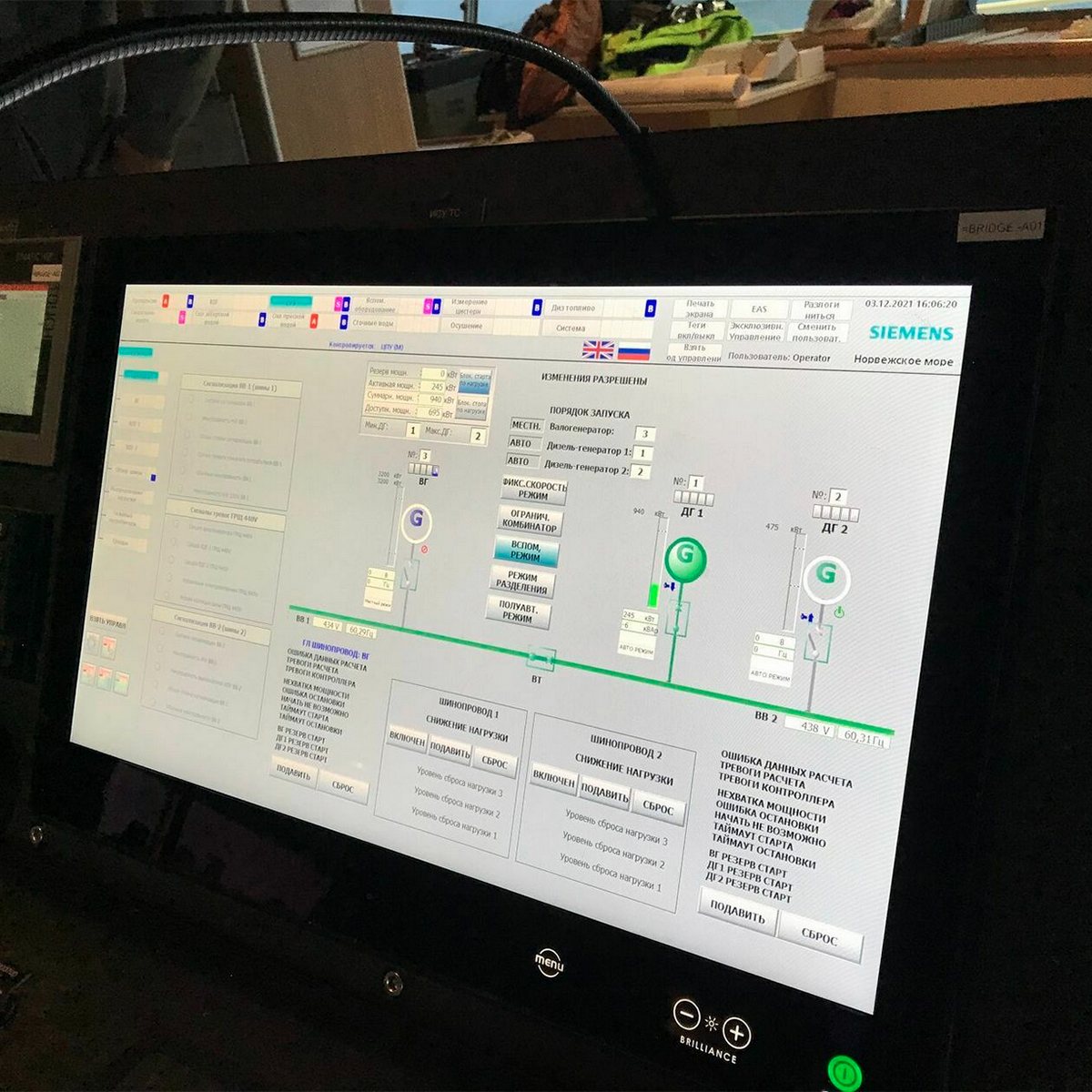
- working with the control and vibration monitoring systems, reading trends and events
- actions in abnormal situations
- operation and maintenance of GIS and SF6 circuit breakers
- hands-on practice on the customer's equipment
How training proceeds
- 1
Programme
Topics, duration and group composition are agreed with the customer.
- 2
Contract
Training is contracted separately.
- 3
Sessions
Theory in the classroom and practice at the equipment on site.
- 4
Completion
Knowledge check and course materials for the participants.
Training formats and group composition
Training is built around the customer’s task, so there are several formats. When equipment is commissioned, an introductory course is part of installation supervision and commissioning: staff get to know the machine during real start-ups rather than from drawings. For an operating fleet we run periodic training — when the shift crew has changed, questions about operating modes have accumulated, or the customer wants fewer operator errors. A separate format is training during a control system upgrade or replacement: operators master the new screens, protections and procedures in advance so that the first start after the work holds no surprises.
Groups are formed by profile: operating staff (operators, shift leaders), maintenance staff (fitters, repair engineers), instrumentation and automation specialists. Each group gets its own set of modules and its own practical part. Group size, duration and number of days are agreed in advance: a short course for one shift or a series of sessions covering all shifts in turn.
Programme: typical modules
The programme is assembled from modules that we adapt to the customer’s specific models and systems. Below is a typical set; topics can be cut or added.
- Machine design. Flow path, bearings and seals, lube oil system, cooling, auxiliaries; for gas turbines — combustor and hot section, for compressors — dry gas seals and the seal gas system.
- Operating modes and transients. Preparation for start, start-up, loading, normal and emergency shutdown, part-load operation; typical mistakes and their consequences.
- Control system. Screens and mimics, trends, event and alarm logs, protection and interlock logic, actions when a protection trips; for compressors — anti-surge control.
- Vibration monitoring and diagnostics. What the sensors show, how to read trends, which changes call for a shutdown and which can be watched until the next planned inspection.
- Maintenance. Periodic work within the scope of the operating manual, consumables control, log keeping, preparation for an inspection.
- High-voltage equipment. Operation and maintenance of GIS and SF6 circuit breakers: gas density control, mechanical operations, inspections, work permit procedure.
- Abnormal situations. Walk-through of typical scenarios: rising vibration, falling oil pressure, surge, sensor failure, loss of communication with the control system.
On-site practice
Theory is the smaller part of the course: the point is practice at the very equipment the staff service every day. On site we go through the machine unit by unit, show the check points and the places where maintenance mistakes happen most often, and walk the lube oil and seal gas lines. On a running machine — reading trends and events in the control system and comparing actual parameters with nameplate data.
Start-ups and shutdowns are practised on the real equipment during planned operations wherever possible; if the machine cannot be stopped for training, we use a digital model or simulator of the control system — this lets operators safely run through emergency scenarios that cannot be reproduced on a live machine. Practice at high-voltage equipment is held only on equipment taken out for maintenance and under the customer’s work permits.
What the customer receives
- course materials in electronic form: presentations, diagrams, quick guides on operating modes and actions in abnormal situations — they can be reused for in-house briefings;
- a knowledge check record at the end of the course listing the topics and each participant’s result;
- recommendations on the maintenance schedule and log keeping if during the training we saw that site practice differs from the operating manual;
- a list of questions worth adding to the customer’s own briefing programme.
Training does not replace the mandatory certification and knowledge checks required by law: our course gives knowledge of specific equipment, while permits and certification are obtained by the staff in the established order.
How to prepare for training
To make the course worthwhile, a few things are agreed in advance.
- the list of participants with their positions and experience on this equipment — the depth of the modules depends on it;
- access to the machine documentation: operating manuals, drawings, control system description;
- event logs and trends for recent months — we analyse real cases from the site rather than abstract examples;
- a room for the theoretical part and access to the equipment in line with the permit rules;
- dates and timetable: sessions are fitted into the shift schedule so that production is not left short-handed.
A training request can be sent via the form below or together with a service contract: state the machine models, the number of participants and the topics you want; we will clarify the rest.
Programme examples
Three typical requests and how a course is built for each.
- Operating staff of a gas turbine power plant. Turbine and generator design, start-up and shutdown, part-load operation, reading exhaust temperature and vibration trends, actions when protections trip. Practice — on the running machine during planned operations; review of last year’s event log.
- Compressor station staff. The centrifugal compressor and its systems: seal gas, lube oil, anti-surge control. The main emphasis is on the signs of dry gas seal trouble and on what to do before the service crew arrives.
- Substation maintenance crew. GIS and SF6 circuit breakers: gas density control, inspections, mechanical operations, work permit procedure and handling SF6. Practice — on equipment taken out for maintenance.
For every programme we prepare handouts for the customer’s own models: not “a compressor in general” but their machine with its nameplate, drawings and settings.
The most common operator errors
The programme is built around the errors our engineers see on sites year after year — these are the ones that cost the customer most.
- starting before warm-up is complete or without checking the lube oil system — bearing scoring and high vibration within the first hours;
- acknowledging alarms without analysing the cause — a minor deviation grows into a protection trip and an emergency shutdown;
- running a compressor near the surge line “because it has always been like that” — accelerated wear of seals and blades;
- replacing filters and consumables “by the calendar” rather than by differential pressure and running hours;
- changing protection settings and controller parameters without a log entry — a year later nobody remembers why the machine behaves differently;
- no record of events during an abnormal situation — the service crew has to reconstruct the picture from staff memory.
In the sessions each such case is examined on an example from the customer’s own site (if it is in the logs), and we show how to spot it in the trends hours and days before the consequences.
Related pages
Questions and answers
Who is the training for?
The customer's operating and maintenance personnel: operators, operations engineers and maintenance staff for turbines, compressors and high-voltage equipment.
Where are the sessions held?
At the customer's site at the equipment or in a classroom, as agreed.
Is training part of the service contract?
Training is contracted separately; at handover into operation it forms part of the installation supervision and commissioning work.
Can the programme be tailored to our equipment?
Yes: the programme is drawn up for the customer's machine fleet and tasks and agreed before the sessions start.
Engineering team
Gas turbine service