
Resident engineers at the customer's site
A resident engineer is permanently based at the customer's site and supports the operation of the turbines and compressors: monitors machine condition, takes part in start-ups and shutdowns, plans maintenance and spare parts and is the first to respond to abnormal situations. This is how our engineers work at Yamal LNG: on rotation above the Arctic Circle, keeping the plant running without interruption.
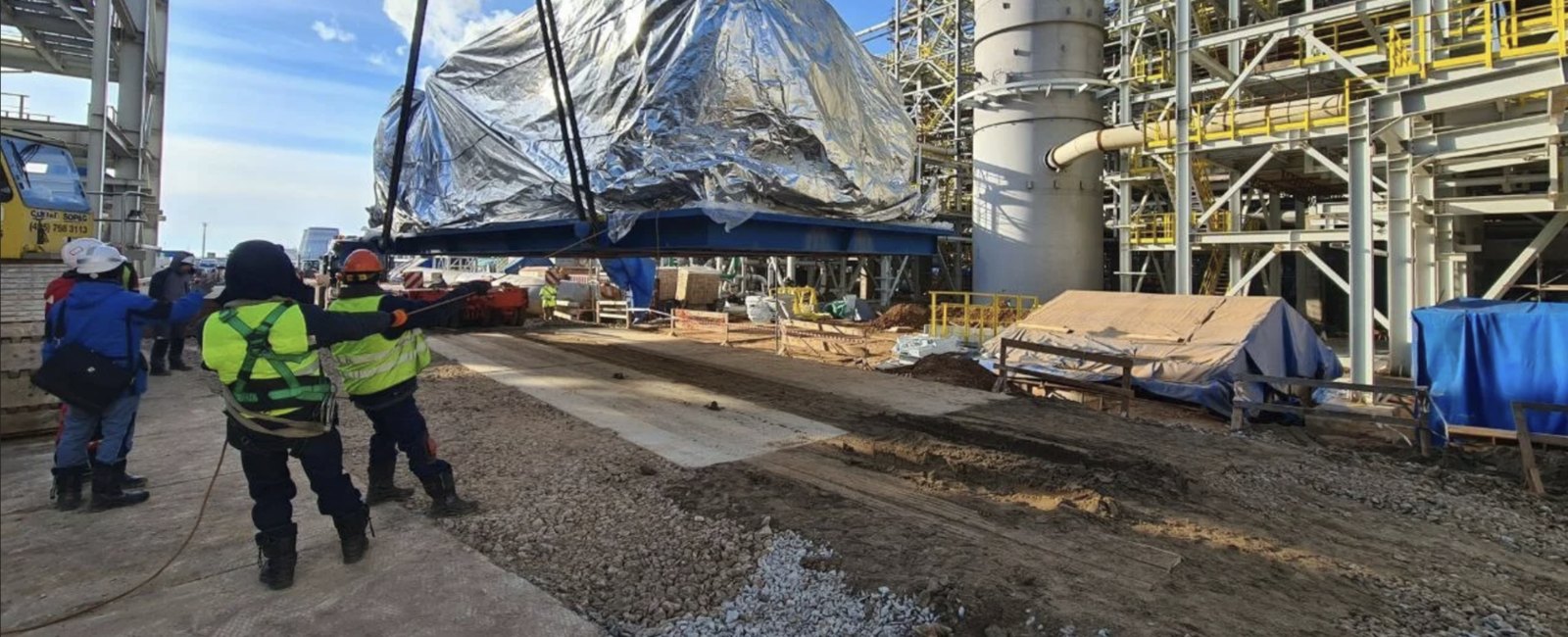
What a resident engineer does
- daily monitoring of turbine and compressor condition from the control and vibration monitoring systems
- participation in start-ups, shutdowns and transient modes
- planning inspections and maintenance by running hours
- keeping the list of spare parts and consumables held by the customer
- first response to abnormal situations and liaison with the company's engineers
- working with the customer's personnel and training them on the job
- reporting on equipment condition
How the work is organised
- 1
Contract
Duties, rotation schedule and communication procedure are set out in the service contract.
- 2
Site access
The engineer completes the customer's access permits and briefings.
- 3
Rotation
Permanent presence on site to the agreed schedule.
- 4
Back-up
The company's team stands behind the engineer: studies, spare parts, crew call-out.
Who the resident engineer format suits
A site inspection solves the task once every few months; a resident engineer — every day. The format pays off where the cost of a shutdown is high and help from afar takes long to arrive: LNG plants and gas processing complexes, production fields, power plants in remote regions, offshore facilities. It is also needed where the customer has no in-house turbine and compressor team, or the team is only being formed: the engineer fills the gap while the staff gain experience.
Another case is the first months after the start-up of a new machine or after a control system upgrade. This is when questions are most numerous and mistakes most expensive; an engineer on site resolves them as they arise. When the period is over, the format can be converted into scheduled site inspections.
Duties by period
The scope of duties is fixed in the contract; a typical breakdown by period looks like this.
- Daily. Walk-round of the machines, control of parameters and trends in the control and vibration monitoring systems, check of the lube oil and seal gas systems, logging of deviations, a short summary for the shift supervisor.
- Weekly. Comparison of trends with previous weeks, review of the event log and protection trips, check of consumables stock, work plan for the next week.
- Monthly. Equipment condition report: running hours, parameter trends, work performed, findings and recommendations, spare parts stock and replenishment proposals.
- At shutdowns and start-ups. Participation in preparation, control of the sequence of operations, review of results; during planned inspections — organisation and supervision of the work, calling in a company crew if needed.
- In abnormal situations. Initial assessment, recommendations to staff, contact with the company’s engineers, arranging a crew visit and spare parts delivery.
Working with the customer’s staff and reporting
The resident engineer works inside the customer’s operations department but remains a company employee: the task is the condition of the machines, not replacing the customer’s staff. In practice this means daily contact with the shift supervisor and the mechanical engineer, participation in operational meetings, joint review of events. The engineer coaches staff at the workplace — a form of training that needs no separate course.
Reporting is organised so that the customer sees the condition of the fleet without asking: a monthly report per machine, prompt notices on deviations, inspection records. The report format can be adapted to the customer’s internal procedures. Anything beyond one engineer’s competence — calculations, complex diagnostics, repairs — is passed to the company’s engineers: the whole team stands behind the resident.
Spare parts and the customer’s stock
One of the resident engineer’s main tasks is to have the right part in stock before it is needed. The engineer keeps the list of spare parts and consumables at the customer’s warehouse, monitors storage conditions, initiates orders in good time based on running hours and the inspection schedule, and builds up an emergency stock — the minimum set of parts without which a machine outage would stretch into weeks.
For Siemens Energy and Dresser-Rand steam turbines and compressors the company supplies genuine spare parts and confirms their origin; for machines of other manufacturers the engineer helps prepare the request and checks the parts received.
How to start
To prepare a proposal we need: the list of machines with models and serial numbers, the site’s operating regime and attendance requirements, the preferred rotation schedule, accommodation and site access conditions, and the scope of responsibility the customer wants to hand over to the engineer. On this basis we agree the duties, the schedule, the communication and escalation procedure and fix them in the contract.
The format works in Russia, Belarus, Kazakhstan and Uzbekistan, onshore and offshore. A request can be sent via the form below — describe the site and the fleet, we will clarify the rest in a call.
What the contract fixes
So that both sides share the same expectations, the resident engineer contract fixes not only the schedule but also the boundaries of responsibility.
- the list of machines and systems the engineer is responsible for, and which work he performs himself versus only organises;
- the rotation schedule and the procedure for replacing the engineer during leave or illness — the replacement is briefed on the site before the previous engineer leaves;
- communication and escalation: whom the engineer informs of deviations and within what time, who decides on a shutdown;
- the content and frequency of reports, the event log format;
- site conditions: permits, accommodation, transport, communication means, access to the control system and documentation;
- confidentiality: data on the customer’s operating modes and equipment condition stay within the contract.
The contract can be part of a long-term service contract for the fleet or stand alone; in the latter case repair work and spare parts are placed as separate orders as the need arises.
What the customer gains
A resident engineer is not an extra headcount but a way to manage the risk of downtime. Deviations are noticed in the trends before a protection trips; planned outages are prepared in advance and run to a scope of work rather than to circumstances; spare parts are in stock by the due date rather than ordered after a failure; the customer’s staff learn at the workplace every day. A crew visit and parts delivery are also arranged faster: the engineer already knows the machine, its history and the site, and does not have to start with a survey.
For the customer this means fewer unplanned shutdowns, a predictable maintenance budget and one person accountable for the condition of the fleet. For remote sites it also means confidence that the first qualified response to an abnormal situation will be on site, not a day away.
Projects and related pages

Questions and answers
When is a resident engineer needed?
At sites with continuous production and a large machine fleet, where an outage is costly and the site is remote: <a class="term-link" href="../glossary/lng/index.html" title="What is LNG and what equipment an LNG plant needs">LNG plants</a>, fields, power stations above the Arctic Circle.
How is the service contracted?
Under a long-term service contract or a separate contract: the duties, rotation schedule and communication procedure are agreed with the customer.
What does the engineer do in an abnormal situation?
Assesses the machine condition, gives first recommendations to the personnel, contacts the company's engineers and, where needed, arranges a crew call-out and <a class="term-link" href="../glossary/spare-parts/index.html" title="What spare parts are and how their origin is confirmed">spare parts</a> delivery.
Do you work outside Russia?
Yes: Belarus, Kazakhstan and Uzbekistan; onshore and offshore.
Engineering team
Rotating equipment service