
up to 745 kW
RLA
- radially split casing with centreline support
- removable end seals with carbon rings
- oil-ring lubrication
Single-stage steam turbines for driving pumps and fans and for starter duty in refining, petrochemicals, chemicals and food processing. Output up to 745 kW (RLA, RLVA) and up to 1,865 kW (RLH), speed up to 6,000 rpm, steam up to 510 °C and 97 bar. Simple design, easy maintenance; the modular architecture adapts to the customer’s standards.
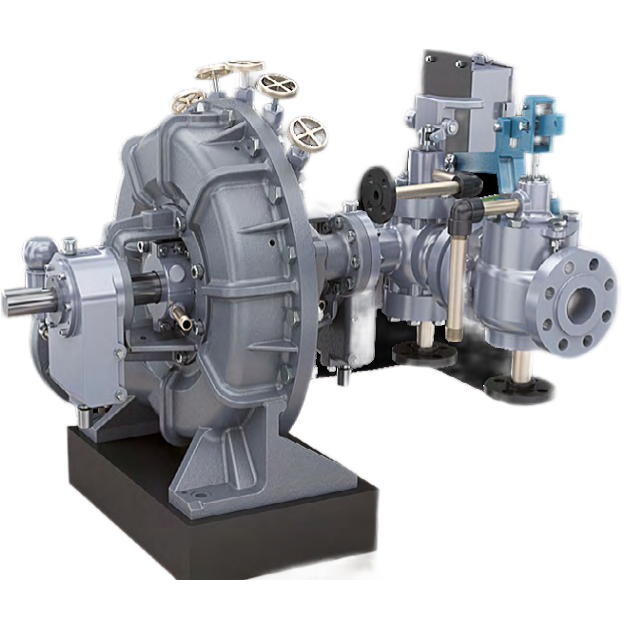
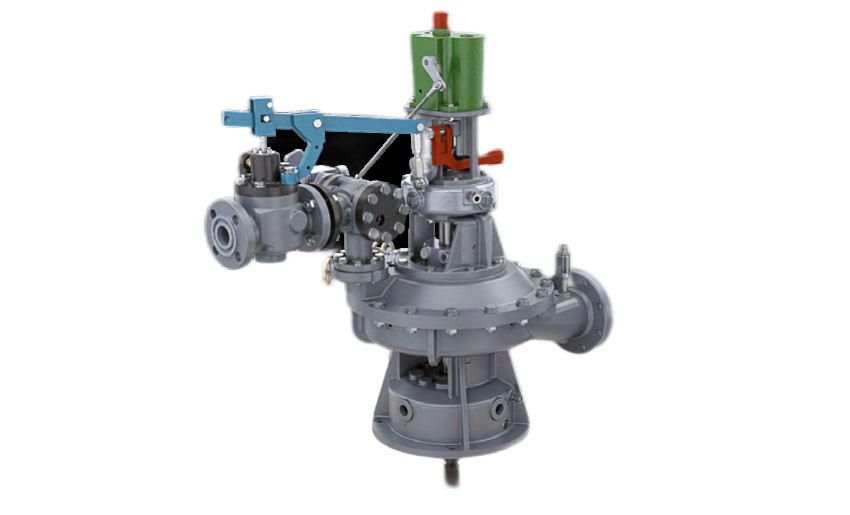
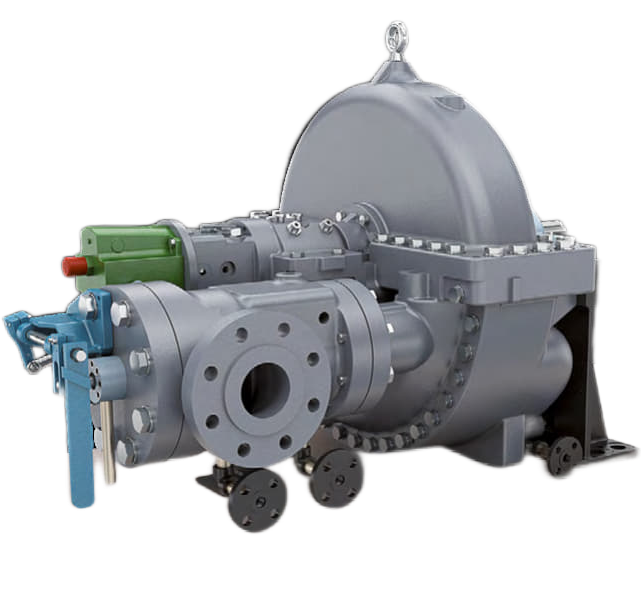
Used in refining, petrochemicals, chemicals, food processing and other industries to drive pumps and fans and as starter turbines. Simple design, high reliability, easy maintenance and affordable cost; the modular architecture allows the turbine to be adapted to the customer’s standards.
| Parameter | RLA | RLVA | RLH |
|---|---|---|---|
| Maximum outputkW | 745 | 745 | 1,865 |
| Speedrpm | up to 6,000 | up to 6,000 | up to 6,000 |
| Inlet steam temperature°C | up to 440 | up to 440 | up to 510 |
| Inlet steam pressurebar (abs.) | up to 47 | up to 47 | up to 97 |
| Back pressurebar (abs.) | up to 12 | up to 12 | up to 22 |
| Number of stages | 1 | 1 | 1 |
| Wheel and blade type | Curtis, impulse | Curtis, impulse | Curtis, impulse |
| Bearing type | ball | ball | ball and roller |
In the basic design a small turbine has no pressurised oil system: the bearings are lubricated by oil rings (RLA, RLH) or by grease (RLVA), and the shaft is sealed with carbon rings. This makes maintenance simpler, but two things need regular checks: steam leakage along the shaft and the condition of the lubricant.
| Component | Series | What is checked | What is replaced |
|---|---|---|---|
| Carbon ring seals | RLA and RLVA (removable), RLH | steam leakage along the shaft | carbon rings |
| Oil-ring lubrication | RLA, RLH | oil level, water in the oil | oil |
| Grease lubrication | RLVA | adherence to the manufacturer’s regreasing schedule | grease |
| Circulating or forced-feed lubrication (option) | RLVA, RLH | oil pressure and temperature | oil, filter elements |
An oil ring hangs loosely on the shaft with its lower part in the sump oil; the shaft turns the ring, which carries oil up to the bearing. There is no pump and the oil feed depends on how deep the ring dips, so the oil level is kept within the specified limits. Carbon rings wear gradually and steam leakage increases; on the RLA and RLVA the seals are removable, which makes ring replacement easier.
A small single-stage turbine is used where steam is available on site and the driven machine needs no more than 745 kW (RLA, RLVA) or 1,865 kW (RLH). Typical duties:
The limitation is efficiency: a single Curtis stage is less efficient than a multistage turbine. Where steam is expensive or more power is needed, a multistage machine is considered: see mechanical drive steam turbines from 8 kW to 50 MW.
Dresser-Rand RLA, RLVA and RLHA turbines are serviced by the company’s engineers: diagnostics, repairs on request or to the scope of the operating manual, and adjustment of the speed governor and protection systems — see steam turbine service and repair. For these turbines we supply Dresser-Rand spare parts: seals, bearings, trip valves, governing and oil system parts. For selection we need the model, serial number and a photo of the nameplate.
In 2024 the company’s specialists completed testing of a digital model of a 2.4 MW single-stage Howden steam turbine to prepare the automatic control system for commissioning at a customer’s site.
Sources and standards: the series data come from the company’s current website; general requirements for general-purpose mechanical drive steam turbines are set by API 611 (6th edition, 2022).
In its vertical shaft and compact design: the RLVA is mounted on pumps with a vertical shaft. The seals are the same — removable, with carbon rings; lubrication is by grease, with circulating oil available; various thrust bearing arrangements are offered. Output and steam data are the same as the RLA.
When more than 745 kW is required (the RLH goes up to 1,865 kW) or when the steam data exceed 440 °C and 47 bar: the RLH is rated for 510 °C and 97 bar, with <a class="term-link" href="../glossary/back-pressure-turbine/index.html" title="What is a back-pressure turbine">back pressure</a> up to 22 bar. The RLH has a horizontally split casing and ball and roller bearings.
One: Curtis wheels with impulse blading. That keeps the design simple, makes maintenance easier and lowers the cost.
Yes: original <a class="term-link" href="../glossary/spare-parts/index.html" title="What spare parts are and how their origin is confirmed">spare parts</a> for RLA, RLVA, RLHA and other Dresser-Rand series. We confirm the origin by catalogue numbers, markings and accompanying documents.
Most often it is steam leaking along the shaft through the carbon ring seals, especially worn ones: the steam condenses in the bearing housing and the water gets into the oil. Oil containing water lubricates less well, and the bearings wear faster. That is why the oil is checked for water regularly and the rings are replaced on condition.
Expert in charge
Rotating equipment serviceManufacturer names and designations are given to identify the equipment we service. Trademarks belong to their respective owners. Energy Management LLC is an independent service company.