
Gas turbine combustion tuning
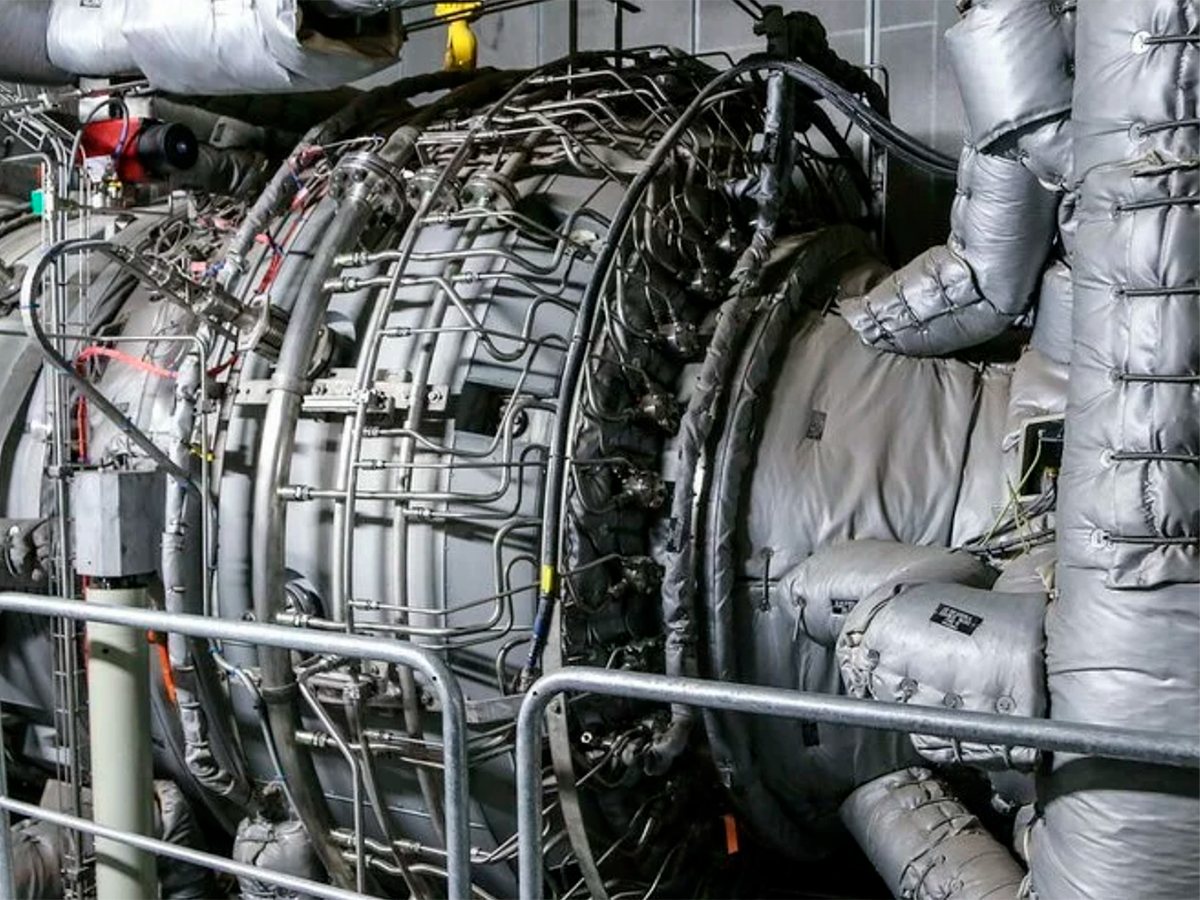
We tune the combustion of gas turbine units with dry low-emission combustors (DLE): fuel split between burners, flame stability, transitions between load modes. The aim is lower NOx and CO emissions without loss of output or component life. Tuning is backed by engineering studies to optimise gas turbine operation.
Scope
- measurement of NOx and CO emissions and combustion parameters at operating conditions
- setting the fuel split between burners and the transitions between load modes
- checking combustion stability and combustor pulsations
- engineering studies to optimise gas turbine operation
- tuning after an overhaul, burner replacement or a change in fuel composition
- checking the combustion-related protections and control system algorithms
- tuning record and recommendations
Why tune combustion: emissions, pulsations, component life
A dry low-emission combustor operates within a narrow window. If the mixture is richer than designed, the flame temperature rises and NOx emissions rise with it. If it is leaner, CO rises, the flame loses stability and pressure pulsations grow. Tuning keeps the machine inside this window at every operating load and across the range of ambient temperatures. The principle of dry low-emission combustion is explained in the glossary entry on DLE.
| Constraint | When it occurs | Why it matters |
|---|---|---|
| NOx emissions | high flame temperature, a large share of fuel in the pilot burner stage | the site’s emission limits are exceeded |
| CO emissions | an excessively lean mixture, part-load operation | incomplete combustion, the limits are exceeded |
| Pressure pulsations | heat release fluctuations resonate with the combustor acoustics | wear and cracking of combustor parts and burners, a protective trip of the turbine |
| Flashback and flame-out | flashback: the flame propagates upstream into the premixing zone, for example after a change in gas composition; flame-out: an excessively lean mixture, transitions between combustion modes | burner overheating, an unplanned shutdown |
In combustors with water or steam injection, the injection itself reduces NOx, and it is the water- or steam-to-fuel ratio that is tuned. Too little water or steam raises NOx; too much raises CO, impairs cycle performance and accelerates wear of combustor parts.
Tuning also affects the life of the hot gas path. Pulsations load combustor parts cyclically, so poor tuning shortens their service life and can lead to unplanned hot section repairs. The aim is settings at which emissions and pulsations stay within permissible limits, while output and the maintenance regime remain in line with the manufacturer’s documentation.
When tuning is needed: triggers and symptoms
Tuning is carried out after work that changes combustion conditions and when changes show up in operating data. Common triggers and what is checked in each case are listed in the table.
| Trigger | What changes | What is checked |
|---|---|---|
| Hot section overhaul, replacement of burners or combustion liners | fuel and air distribution between the burners | emissions and pulsations at all loads, exhaust temperature spread |
| New gas supplier or a change in gas composition | calorific value, Wobbe index, burning velocity of the mixture | compliance of the gas with the manufacturer’s documentation, fuel split, margin to flashback |
| Change of season | temperature and density of the inlet air, fuel-to-air ratio | emissions and pulsations under the new conditions |
| NOx or CO rising in monitoring data | the operating point drifts towards the edge of the window | the cause: fuel, burners, sensors or the control algorithm |
| Rising pulsations, humming, trips during mode transitions | combustion stability margin | mode switch points and the fuel split between burner stages |
| Upgrade or replacement of the control system | combustion control algorithms run on a new platform | algorithm performance on the running machine in all modes |
In climates with large seasonal temperature swings, tuning is often checked before summer and before winter. If measurements point to damage to burners or combustor parts, tuning alone will not solve it: their condition is assessed at a hot section inspection. Upgrades of gas turbine control systems are covered on the control systems for gas turbines and compressors page.
How the work proceeds
- 1
Request
Model, serial number, running hours, the concern.
- 2
Survey
Measurement of emissions and combustion parameters at operating conditions.
- 3
Work programme
Scope, operating modes and personnel agreed with the customer.
- 4
Execution
Step-by-step tuning at load with emissions and pulsations monitored.
- 5
Report
Technical report with measurements and recommendations.
What is measured and which calculations are needed
Tuning relies on measurements taken at several load steps. Calculations make these measurements comparable with the emission limits and with earlier results.
What is measured
- NOx and CO concentrations and the oxygen content of the exhaust gas;
- combustor pressure pulsation amplitudes by frequency band — this is not bearing vibration, which is assessed by vibration diagnostics of turbomachinery;
- exhaust temperatures from the thermocouples downstream of the turbine: a growing spread points to uneven burner operation;
- load, fuel flow and pressure, and the fuel split between burner stages;
- ambient air temperature, pressure and humidity, and the fuel gas composition.
Which calculations are performed
- concentrations are corrected to 15% O₂ on a dry basis: C(15% O₂) = Cmeas × (20.9 − 15) / (20.9 − O₂meas). For example, 30 ppm at 15.5% O₂ corresponds to about 33 ppm at 15% O₂;
- ppm values are converted to mg/m³ at 0 °C and 101.3 kPa: for NOx expressed as NO₂, 1 ppm ≈ 2.05 mg/m³; for CO, 1.25 mg/m³;
- the Wobbe index is calculated from the gas composition under GOST 31369-2021 (ISO 6976:2016): it shows whether a gas of different composition will deliver the same heat input through the same fuel nozzles at the same pressure. The result is compared with the manufacturer’s permitted range; some manufacturers specify it as a modified Wobbe index, which also takes account of the gas temperature upstream of the burners;
- the results are compared with the site’s emission limits and with earlier measurements at similar load and ambient temperature.
Methods for determining gas turbine exhaust emissions in acceptance tests are set out in GOST R ISO 11042-1-2001 (the authentic text of ISO 11042-1:1996), which also sets the reference conditions for emissions: dry gas at 0 °C, 101.3 kPa and 15% O₂. For stationary gas turbine units rated 2.5–200 MW that drive turbine generators, clause 2.8.15 of GOST 29328-92 limits NOx, expressed as NO₂, at 0.5–1.0 of rated load to 150 mg/m³, and for newly designed units that entered service from 1 January 1995 onwards to 50 mg/m³ on gas and 100 mg/m³ on liquid fuel. The limit for a particular machine is set in the site’s environmental documentation. NOx and CO values in machine specifications are given on the 5–62 MW gas turbines page.
What data to prepare for a request
The initial data are reviewed by the company’s service specialists, who have been trained at the equipment manufacturers’ plants; they use the data to define the scope of work and the load steps for the measurements. It is worth attaching to the request:
- the gas turbine model and serial number, the combustor type (DLE, diffusion, with water or steam injection) and the control system version;
- running hours and number of starts, the date and scope of the last hot section inspection or overhaul, and the list of replaced parts;
- fuel gas composition from chromatographic analyses, gas pressure and temperature upstream of the turbine, and expected changes in supply;
- trends of load, emissions, pulsations and exhaust temperatures over recent months, and protection trip logs;
- the site’s emission limits and data from the emission monitoring system, if one is installed;
- the operating mode: base load or peaking, generator or compressor drive, minimum and maximum load.
During tuning, it must be possible to change the load in steps at agreed times: at a power plant this is agreed with the dispatcher, at a compressor station it is coordinated with the process schedule. Settings are changed only with the customer’s agreement. Emission and pulsation values before and after tuning at the same operating points are worth keeping: they become the baseline for the next tuning or seasonal check.
Projects and related pages
Questions and answers
When is combustion tuning needed?
After a hot section overhaul or burner replacement, after a change in fuel composition, when emissions or pulsations rise, and periodically under the maintenance programme.
Is output lost when emissions are reduced?
The aim of tuning is to lower NOx and CO without loss of output or component life: the settings are chosen within the stable combustion window given in the manufacturer's documentation.
What is DLE?
Dry Low Emission combustion: NOx emissions are reduced by pre-mixing fuel with air instead of injecting water.
Does the turbine have to be shut down?
Tuning is done with the machine running at different loads; a shutdown is needed only for associated work on the hot section.
Is retuning needed when switching to gas of a different composition?
As a rule, yes, if the Wobbe index or the share of heavier hydrocarbons and hydrogen changes. Gas composition affects the heat input of the burners, the burning velocity of the mixture and the margin to flashback. The gas is first compared with the permitted range in the manufacturer’s documentation. Within that range, the combustion mode is adjusted by tuning; outside it, a different burner or fuel system design may be required.
What is the difference between combustor pulsations and turbine vibration?
Pulsations are gas pressure oscillations inside the combustor, measured with dynamic pressure sensors. Vibration is the mechanical oscillation of the rotor, bearings and casing, measured with sensors at the bearing housings. Strong pulsations can be transmitted to the casing, but the causes and remedies differ: pulsations are reduced by combustion tuning, and vibration by balancing, alignment and repair.
Can emissions be reduced without replacing the burners?
Often, yes, if the rise in emissions is caused by drifting settings, a change of gas or of season: the operating point is brought back into the window by tuning the fuel split and mode switch points. If the burners are worn or damaged, or the machine is at the limit of its combustion system, tuning alone is not enough; burner repair or replacement is then considered based on measurements and inspection, in line with the manufacturer’s documentation.
Engineering team
Gas turbine service